My true love never gives books

Last week, the Guardian tweeted out

Screen Shot 2015-02-10 at 9.21.08 AM

I think that there is a great reason that books are not amongst the gifts given in the 12 days of Christmas song. It is such a nuanced, difficult prospect to give books to anyone other than a child.

I really struggled to come with a book I was given. Though we had lots of books in the house my parents didn’t give us books as presents.  I have had an active library card since I was 4. I’m a borrower first and foremostly. Do I count books that librarians have given me? But that is their job. They are employed to, amongst many other tasks, suggest books for me to read.
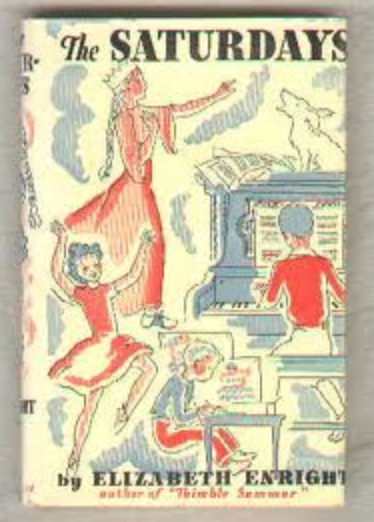
Screen Shot 2015-02-10 at 8.08.14 amIf I count librarians, then I would have to say I fell in love with Elizabeth Enright’s The Saturdays. The first of the Melendy Quartet, written in 1940, follows the Melendy children living in New York, pooling their pocket money and having an adventure in the city. Mona, Rush, Miranda and Oliver set about on their adventures and in the process introduced me to the Opera, Central Park, the Museum of Modern Art. It is a splendid book that I read to my own boys when they were younger. It has not dated. It remains fresh and relevant, contemporary when it was published, yet now it is a glimpse at a city from a historical perspective. When Adam Gopnik’s From the Children’s Gate came out several years ago, I read through it excitedly. A book about children growing up in New York City and Central Park and love and life just had to have this American classic included. Sadly, he did not mention this most beloved book.
Continue reading

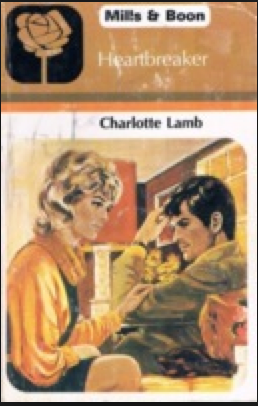
Heartbreaker: A TBR Challenge Review

As part of SuperWendy’s TBR Reading Challenge I picked up this Charlotte Lamb novel that has been waiting on my shelf for several months. I am totally obsessed with Ms Lamb and she has once again delivered a strikingly dark story. Here is my (rambly) review:

Screen Shot 2015-01-22 at 11.18.44 pm Heartbreaker

by Charlotte Lamb

published by Mills & Boon, 1981.

The back story is that Caroline had escaped her cruel and violent husband Peter. He was an alcoholic that used to beat her up but Caroline and his mother, Helen who lived with them, would make excuses for his behaviour and would cover up Caroline’s injuries so to protect him. But when Peter started hitting their daughter, Caroline leaves Yorkshire for the anonymity of London. Three years later, Caroline finds out that Peter has died and her former mother-in-law wants to see her granddaughter again. Caroline and Helen have a deep love and respect for each other. It is Helen’s nephew (and the hero of this story), Nick that finds Caroline and coerces her to return to the Yorkshire village. Nick is a menacing and mean. For a hero, I found him too rough and a tad violent in his first scene with Caroline. Though he does not hurt her, he certainly does his best to intimidate Caroline. He is convinced that his cousin’s alcoholism and subsequent death was due to his wife having left him.

All human beings are a tangled web of contradictions and confusions

Continue reading

On Reading: The Shelf

Every day and throughout the year, I spend a substantial amount of my time reading about reading. From scholarly articles to academic books to chronicles of reading and reading memoirs. I am going to post a series of short observations on the books (and the occasional articles) that I have been reading particularly reflecting on the presence (or lack thereof) of romance fiction, and on how I feel my perceptions of reading aline with the authors.

The Shelf: From LEQ to LES

The Shelf: From LEQ to LES

The Shelf: From LEQ to LES: Adventures in Extreme Reading

by Phyllis Rose

Published by Farrar, Straus and Giroux, 2014

In my final post in this On Reading reflections, I explore The Shelf  in which Phyllis Rose decides upon reading every book on a specific fiction shelf (LEQ-LES) in the New York Society Library (NYSL) allowing the library’s arbitrary alphabetised ordering principle (such as I discussed in my last post) to dictate her choices.  I really like the sub sub heading of Adventures in Extreme Reading. Extreme reading, I assumed for the risks the reader takes in serendipitous choice of a shelf that could introduce all manner of wild ideas to the reader. For if this is extreme reading then librarianship by default becomes an extreme profession, one which allows us to venture into readerships unphased and fearless. I also think that this concept of extreme reading is one that we in the library profession take for granted as we have our regulars who often tackle shelves without documenting their progress. Continue reading

On Reading: The Pleasures of Reading

Every day and throughout the year, I spend a substantial amount of my time reading about reading. From scholarly articles to academic books to chronicles of reading and reading memoirs. I am going to post a series of short observations on the books (and the occasional articles) that I have been reading particularly reflecting on the presence (or lack thereof) of romance fiction, and on how I feel my perceptions of reading aline with the authors.

The Pleasures of Reading

The Pleasures of Reading

The Pleasures of Reading: A Booklover’s Alphabet by Catherine Sheldrick Ross

published by Libraries Unlimited, 2014

So far the books I have discussed I found by browsing the library shelves at my university, whereas Catherine Sheldrick Ross’s The Pleasures of Reading led me to them.


Catherine Sheldrick Ross is one of “my tribe”. She is a librarian scholar and researcher of readerly people at Western University, Ontario, Canada (well actually, she is a professor emeritus of library and information  science). I first came across Ross upon reading her paper “Reader on Top: Public Libraries, Pleasure Reading and Models of Reading”. Ross, in her paper discusses the child series reader, the romance reader, pleasure reading, reading as a ladder and what I found particularly striking, is the anxiety that librarians feel in promoting reading that is not considered by literary standards to be “the best”. Continue reading

On Reading: Reading the 21st Century

Every day and throughout the year, I spend a substantial amount of my time reading about reading. From scholarly articles to academic books to chronicles of reading and reading memoirs. I am going to post a series of short observations on the books (and the occasional articles) that I have been reading particularly reflecting on the presence (or lack thereof) of romance fiction, and on how I feel my perceptions of reading aline with the authors.

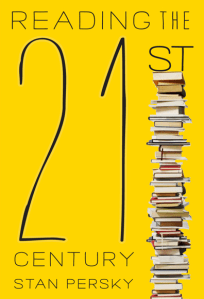
Reading the 21st Century

Reading the 21st Century

Reading the 21st Century: Books of the decade, 2000-2009 
by Stan Persky
published by McGill-Queen’s University Press, 2011.

I should have posted this blog last night. Instead, my son and I had an all out battle on SingStar. We belted out power ballads and I wiped the floor with him thanks to Bonnie Tyler and Queen. In some cases we sang songs familiar to both of us and in other instances we sang songs new to us. What blew me away though was my son singing Naughty by Nature’s O.P.P. The rapping is phenomenally fast in that song. My son has only heard it a couple of times yet he was able to keep up with the text flying across the screen – I could not. Earlier in the day he spent a few hours reading his fifth novel for the summer holidays – Suzanne Collins’s Catching Fire (“it isn’t as good as the first one, mum”). I also know that amongst his feeds and apps he subscribes to daily Sports news (as a teenaged sports nut is wont to do) and SBS News (“you have to have a balanced world view, mum”). He had also watched five episodes of Community with the captions turned on. I consider my son to be an average reader. Continue reading

On Reading: Why I read

Every day and throughout the year, I spend a substantial amount of my time reading about reading. From scholarly articles to academic books to chronicles of reading and reading memoirs. I am going to post a series of short observations on the books (and the occasional articles) that I have been reading particularly reflecting on the presence (or lack thereof) of romance fiction, and on how I feel my perceptions of reading aline with the authors.

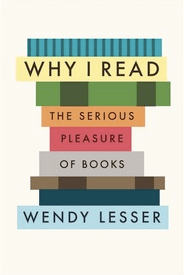
Why I read by Wendy Lesser

Why I read by Wendy Lesser

Why I read: the serious pleasure of books by Wendy Lesser

published by Farrar, Straus and Giroux; 2014


In her book “Why I read” Wendy Lesser writes that she has tried to have a broad definition of literature, including plays, poems, essays and novels, “from traditional literary forms to mysteries and science fiction, memoirs and journalism” (p 5). In describing such broadness I was hopeful. A female author, the wave of attention that romance has received over the last five years and a claim to wide reading. However, I was disappointed that, with the exception of a brief mention of fairy tales and the marriage plot (Lesser p37) Lesser does not include any romance fiction in her book. However, she does lauds Henry James’s female characters and says that they “do not come ready-packaged with a character that accompanies them through life, like a kit-bag of charms carried by the generic hero of a fairy tale”. Continue reading

On Reading: What we see when we read

Every day and throughout the year, I spend a substantial amount of my time reading about reading. From scholarly articles to academic books to chronicles of reading and reading memoirs. I am going to post a series of short observations on the books (and the occasional articles) that I have been reading particularly reflecting on the presence (or lack thereof) of romance fiction, and on how I feel my perceptions of reading aline with the authors. 

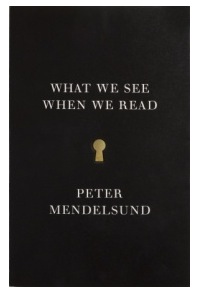
What We See When We Read by Peter Mendelsund

What We See When We Read by Peter Mendelsund

What we see when we read: A phenomenology with illustrations

by Peter Mendelsund

published by Vintage Books; 2014

I have mixed feelings about the way I read this book. I read it during grabbed moments, between meals (including one I burnt – a good indicator of the level of my engagement with this book yet not so good for the nourishment of my family), on transport, in that half hour in the morning before anyone else rises, rather than immersing myself into it and reading it in a sitting. This has affected the way I have related to the book because it is not a book to be read so haphazardly. It is a book that needs quiet and concentration. Peter Mendelsund is a lauded book cover designer and an associate art director. The New York Times ran an interesting article on him (and this book). I liked Mendelsund’s visual and textual ruminations on reading. His conscious exploration of what it means to be reading, how we view the texts, the images in our mind, the whitespace and ideas that occur on the page as well as the visualisations that the written words create in our own minds. He writes:

All good books are, at heart, mysteries. (Authors withhold information. This information may be revealed over time. This is one reason we bother to turn a book’s pages.) (Mendelsund, 2014, p 122)

Continue reading

On Reading: The Last Book

Every day and throughout the year, I spend a substantial amount of my time reading about reading. From scholarly articles to academic books to chronicles of reading and reading memoirs. I am going to post a series of short observations on the books (and the occasional articles) that I have been reading particularly reflecting on the presence (or lack thereof) of romance fiction, and on how I feel my perceptions of reading aline with the authors. 

Reinier Gerritsen's The Last Book

Reinier Gerritsen’s The Last Book

The Last Book by Reinier Gerritsen (photographer); introductory essay by Boris Kachka. Published in 2014.

Boris Kachka, in the introduction of The Last Book  discusses futurist Negroponte’s prediction that the printed book will disappear by 2015. Though this prediction has not been realised, ebooks have indeed impacted the way we read. On transport, we get fewer glimpses at a stranger’s individual taste. Where print books were a window to a person’s self, tablets and ereaders, Kachka says, now act as a mirror. Phototgrapher Reinier Gerritsen observed that the incidence of people reading on trains was diminishing so he wanted to document the reading that was still being undertaken on transport.

Gerritsen’s photographs of commuters with their print reading choices depict commuters whose reading choices are broad. There are classics, bestsellers, eclectic and translated titles, children’s books, fiction and nonfiction. There are more male than female authors and more male than female commuters represented in this book. Continue reading

Planning to not plan (too much)

This is a blog I mean to write early last week but, as with all plans around Christmas and New Year’s Day, it would have been best if I had made no plans at all. In kicking off 2015 I want to look back at 2014 which has been a mixed year of experiences for me. I will throw some thoughts onto my page here:

Broader reading

After a few years of not working in a library (and being a library researcher and educator instead) I now have a casual librarian position in a library far from home. The far from home is significant as I am reading on my commute which is blissful. But most importantly, I am reading more broadly. I had not realised the degree with which my reading narrows when I am a buyer of (romance) fiction. I have a limited book buying budget and I am averse to experimenting with my limited funds. I also stopped using my libraries regularly (shocking revelation!) through sheer laziness so being back in a public library has been wonderful. Continue reading

Little library thoughts

Every morning, I walk past a little library. I have been doing this for the past 2 years. When it first started there was an excited sense of discovery. I found lovely books on a daily basis. I scored 2 Julia Quinn books, Ayaan Hirsi Ali’s biography, complete box sets of M*A*S*H, Darren Shan (autographed!!!!). In return, I would place much loved doubles and clean new books that I did not have the time to read.


Little Library - November 2012

Little Library – November 2012


Last year, this little library was so popular that many in the community would leave all their books, whether they fit in the box or not. AT first , they were still interesting and new. Continue reading