Observation Note 60:Here’s one I prepared earlier. Over the years I have started many a blog post just to leave it in my drafts unpublished. Study, family, work – a number of responsibilities have always kept me from completing posts. Since I decided to blog every day in June I thought it would be a good opportunity to post some of those drafts as well as books that I have read over the years. I know that it will make for a bit of disjointed reading. I was hoping for my observations and notes to link in and refer to each other but it might take me a while to get into writing posts with interlinking ideas. Meanwhile, over the next month I will list some books that I have enjoyed over the past few years that I have not managed to post about. The scant few people who follow ShallowReader on Instagram or GoodReads may have already seen me discuss some of the ones I will highlight. Here are two for today which are kind of in the same genre as Vivian Gornick and Elizabeth Cady Stanton from my previous notes and observations this week.
Reading Note 22: How deep is your rage. I read Mary Beard’s Women and Power: A Manifesto over a month ago. Mary Beard traces the origins of Western history’s misogyny from Homer’s Odyssey through the millennia to the contemporary era, showing how women have been excluded from civic life with “public speech being defined as inherently male”. The book is made up of two essays, both adaptations of keynote speeches Beard made in the 2010s. Beard is a classist and a historian and her writing style is engaging and clear. She argues that women should not try to be more like men but instead, we should be challenging societal structures so that we can place a higher value on female traits. In showing many examples of women being silence, Beard in her second essay, goes full circle and starts examining the ways that women were found to have their voices heard.
I became especially engrossed in Fulvia, the first living woman to have her image on Roman coins, who repeatedly stabbed the dead Cicero’s tongue for having silenced her in the past. I had never heard of Fulvia before, but I felt like I understood the sheer, burning anger that she must have had, especially in light of the belligerent dismissal and the continued perpetuation of silencing Australian women’s voices protesting the rape culture in our parliament. If you are unaware of the reason for all the women’s marches around Australia, a quick internet search should bring up our heinous government’s attitude towards women. Even this week, the continued dismissal of Brittany Hughes who was raped within the Australian parliament continues to make me rage rage rage (but not so much that I would stab at a dead tongue).
Reading Note 23:Model reader. I read Chimamanda Ngozi Adiche’s We Should All Be Feminists which is the speech she made for her TED talk in which she discusses the importance of feminism and the institutional marginalisation of women and, frankly how to understand these issues and work toward making changes. The thing that especially stood out for me in my reading of this short essay is that, just like Ayaan Hirsi Ali in Infidel, and Alice Munro, and I am sure many other writers, Ngozi Adiche read a lot of Mills & Boon novels. I feel that this is good company to keep.
Observation note 57:Football crazy. I went to the movies with my family tonight. This is a rare occurrence in this age of streaming on our own devices. The last time all four of us went to the films together was when I wanted to watch Bridget Jones’s Baby a few years back. This time, in a similar vein, we watched King Otto with its fabulous byline of “Ancient Greece had 12 gods. Modern Greece has 11”. The movie is a sports documentary about the German coach Otto Rehhagel, his bilingual assistant coach Ioannis Topalidis and the Greek National Football Team winning the Euro 2004 Cup.
Observation note 58: Football mad. My family is totally and utterly football mad. They watch at all hours, they are members of their team, Sydney FC, they go nuts in the member’s cove, they travel nationally and internationally to see their teams play and frankly it all got a bit intense several years ago when my eldest, unfortunately, was seriously assaulted at a derby game. These apples of my eye have not fallen all that far from my tree as I was football mad in my youth too with the ultimate kudos of having sat directly in front of Maradona (who was in the member’s box) at a local game in Sydney. I am a potty-mouthed fishwife at the football as I forget myself and start heckling the teams (my sons never realised the reason I read books during games is not because I am bored but because I get so intensely enraged in the game I forget my manners at home). I too come from an apple orchard as my father was in love with the game and was one of the (many) founders of PanHellenic in Sydney in the 1950s. Though a religious man who taught at his parish’s Sunday School, he was so mad for football, that when the leaders of the church Sunday Schools asked him to give up his role with his football team as they felt he was a bad example the the children, my dad quit going to church instead. So it was only apt that we went to see this movie.
Observation note 59: Football it has robbed her of the little bit of sense she had. Though the movie on the surface is about how Greece, the most underrated and the underdog team of Europe won the cup, it actually is about how the strength of an excellent translator (On first looking into Chapman’s Homer anyone???), who has deep knowledge of two very different languages and cultural mores, was able to bring an understanding between a German coach and a Greek football team. Throughout the movie, I was on the edge of my seat. Despite knowing the outcome, the narrative is told so well that the tension of each game is palpable, each goal thrilling, every emotional celebration fulfilling. The hero of this movie is not only the coach and the team members, but the extraordinary Ioannis Topalidis who brings a deep cultural understanding to his role of translator and assistant coach. I loved the way the language barriers were depicted in this movie, and even more so how the barrier was overcome which led to the best of German and Greek cultures being blended. Topalidis and Rehhagel seem to have a wonderful relationship (dare I say this was a bromance movie) with King Otto’s ending being reminiscent of Casablanca. I loved it. This may be because of my Greek heritage. But then again, it may just be because it is a story well told.
Reading Note 21:Alone. As memoirs on reading are wont to do, Vivian Gornick’s Unfinished Business is sending me down many rabbit holes, seeking her references so I can read deeper, to understand her with more context*. Gornick in her discussion of the trajectory of women’s rights comes across Elizabeth Cady Stanton who had been the President for the National American Woman’s Suffrage Association in the late 19th century. I took a moment tonight to listen to Elizabeth Cady Stanton’s non-fiction essayThe Solitude of Self, this essay was her last public speech before standing down from her position. Gornick writes that Stanton had become incredibly lonely because the “fight for suffrage had grown steadily more conservative”. This loneliness though gave Stanton clarity and understanding about the human condition and what it means to be alone even if you are in a deep relationship. Alone giving birth, alone in the world, alone when you die. She says that “the solitude of the King on his throne and the prisoner in his cell differs in character and degree but it is solitude nevertheless” and she stresses how necessary it is for women to have the tools and skills and knowledge to manage their lives and not to lean into their husbands so much that if they are alone they cannot move forward.
Observation Note 56:Suffrage. I take a moment to think about both Gornick and Stanton. Their feminist ideology was echoed to me from a young age by my father who insisted that we (his four daughters) study and work and be completely independent. I remember how he would always size up our male friends and ask them cringe-worthy questions about their life plans (despite our insistence to him that they were friends and not love-interests). One of our friends was training to be a doctor and dad spent a good hour talking to him (whereas we had left the room as we got rather bored by their conversation). The moment our friend left, Dad turned to us and said (I’m paraphrasing) “I certainly hope none of you are interested in that young man. He told me that he wants a university educated wife but once they marry he doesn’t want her to work, she will need to stay at home and clean and cook for him. Keep away from such men”.
Great vetting skills from my dad. I feel like he may have read Elizabeth Cady Stanton in his own reading journeys.
*I am well aware of the irony of seeking depth in light of my Shallowreader moniker. But hey – I grew up singing along to snowy, cold Christmas songs in the midst of stinking hot summers. I embrace my contradictions.
There is a copy of The Solitude of Selfavailable on Project Gutenberg, however I cheated and listened to the LibriVox Youtube recording while I washed the dishes. Even the staunchest feminist needs to clean up at the end of the night.
Reading note 19: Names. In Unfinished Business: Notes of a re-reader, Vivian Gornick discusses her feelings on being a couple and that she “flinched when addressed as Mrs”. This is something that I keenly understood as I have never used the title despite being married now for 25 years. Even before I married, I was ticking the Ms. box as it just annoyed me that men got the standard Mr. and women had three choices, all of which sent quite clear messages to whoever was collecting your information (as trivial or disinterested as they may be by the selection). What surprises me is that I am the outlier here.
Reading note 20: Wait! This is influence?! A couple of days ago I wrote about Lauren Layne’s Marriage on Madison Avenue and that the main character was a social media influencer. I wrote that I have little interest in such a person let alone a fake such a person but what the book did for me was have a narrative against which I could compare the many years of watching a variety of people I knew posting their planning for their nuptials to the point of tedium. Reading about a character doing this added another level of tedium which may have contributed to my lethargic two week reading of the novel. I had to remind myself that the circus of wedding planning brings out the crazy in people who I used to like.
Self-flagellating note to state that it brought out the crazy in me too…mostly because I hated the whole process.
Observation note 55:Missed moment. A few months ago, someone I know, someone who I used to think was lovely and sweet and beautifully friendly, posted on their social media that she was “Miss to Mrs” and “rebranding in process”. I cringed and I felt saddened that despite decades and decades of women rallying to not be objectified, here was someone who willingly was choosing to be “rebranded”. However, this is not what made me angry. Disappointed – sure but people can do whatever they like in their life. But feeling angry – I left that for the wedding reception, upon looking at the list of guests so I can find the table I was seated at, I found that “Miss to Mrs Rebranded” chose to change my name from the e-RSVP database and bestowed upon me my husband’s surname. A name I have never used. A name that I don’t identify with at all. The rage I felt in that moment was red, it was hot, it made me want to flip tables. If this is what “influencers” think they can bestow upon people, changing their name and their title at will, then rage I will. A few years ago, another lovely young woman who married a family friend whispered to me “I desperately wanted to keep my name but [name redacted] wouldn’t let me. It offended him”. I am offended for her. I am angry beyond comprehension, to the point of my vision blurring. Perhaps this is why I am struggling in my reading of romance fiction especially. All I can think is of young obsequious women going from Miss to Mrs and forcing everyone else to do it too.
Earlier today, I saw long-time Twitter friend Flexnib post that she is going to try to do BlogJune just like in the olden blog days. I have decided to try to post every June day too and I thought I would start simply, resurrecting my Reading and Observation notes, a style of writing which I have previously used and I find particularly enjoyable.
Reading Note 17: Other readers. I’ve just finished reading Vivian Gornick’s Unfinished Business: Notes of a chronic rereader. I first heard about Gornick pre-pandemic, 18 months ago on Miss Bates Reads Romance where Kay reviewed Fierce Attachments, a book that continues to sit unopened on my bedside bookshelf. I managed to borrow three of Gornick’s books from the library and I wanted to start with her book on rereading so that I can get an insight into who she was and what her book choices mean to her. I enjoyed Unfinished Business, this collection of essays has her rereading and reconnecting to books that she has loved many years ago. Her revisiting of each text finds her either loving or rejecting the book as she delves deeply into the characters driving each novel. Gornick is not writing an analysis of these books, but instead, she is relating her own life through her reflections of her rereads. Each essay was detailed and interesting but I was increasingly annoyed that her choices were all tragedies – stories where everyone grapples with life’s difficulties and love is attained and lost. I kept wanting Gornick to choose something more edifying, something with happier outcomes, something that could mix up her reading choices rather the the predictable stalwart classics. Right at the end though, she has a short essay on about a “cheap 1970s paperback” that falls apart when she takes it into her hand. Gornick relishes in her material experience of the pages falling out one-by-one and how she salvages this unnamed book by slowly reading through it again, marking the pages as she ordered them, and bounding the book with a rubber-band. Gornick doesn’t name the books and I am so curious. I would love to know the name of the one book that she doesn’t name. My guess is that it is something along the line of Kathleen E. Woodiwiss’s The Flame and the Flower.
Reading Note 18:Languishing. Vivian Gornick discusses being “unreceptive” to a book, just not in the right mood to read it; not “in a a state of readiness”. Well that is how I have been feeling lately about all fiction reading. I pick up a novel and I either give up just a few chapters in, turned off the book for something as trivial as the name of a character, the description of a sofa, or an internal thought that I am just not interested in reading. This sense of fiction ennui is not what I want to be feeling and I hope it doesn’t last for too much longer. Meanwhile, I will continue reading memoirs and I will post about my thoughts on them here.
Vivian Gornick’s Unfinished Business, Fierce Attachments and The Odd Woman and the City have all been borrowed from a NSW public library.
I’m over 10 days late for this month’s TBR challenge having completely missed posting for March and April’s TBR. The May topic being Fairytale/Folktale and my connection to the theme is a bit of a tenuous stretch and only mentioned briefly towards the end of this post. As for how long this book has been on my TBR, I’m just going to say that I have borrowed it three times, with a three month loan period (inclusive of renewals), and I only managed to read it at the tail end of this latest loan.
Book:Marriage on Madison Avenue by Lauren Layne (the third in the ˆ series)
The Blurb: Can guys and girls ever be just friends? According to Audrey Tate and Clarke West, absolutely. After all, they’ve been best friends since childhood without a single romantic entanglement. Clarke is the charming playboy Audrey can always count on, and he knows that the ever-loyal Audrey will never not play along with his strategy for dodging his matchmaking mother—announcing he’s already engaged…to Audrey.
But what starts out as a playful game between two best friends turns into something infinitely more complicated, as just-for-show kisses begin to stir up forbidden feelings. As the faux wedding date looms closer, Audrey and Clarke realise that they can never go back to the way things were, but deep down, do they really want to?
This is the final instalment to the Central Park Pact series.
How did I find this book: Lauren Layne has become an auto-read author for me since Dr Jayashree Kamblé recommended her novel Walk of Shame to me several years ago.
Meet Cute: A bit of series backgrounding first: this is a trilogy with the protagonists of each book, Audrey, Claire and Naomi having dubiously met at the funeral of their (yes – plural THEIR) dead boyfriend a couple of years earlier, having discovered that they had all been duped (ahem sleeping with) the same man. On the day of his funeral (no – they didn’t kill him), the three discover that they weren’t his only girlfriend/wife. Though horrified by their own role in being “the other woman”, they forge an unlikely friendship where they look after each other – especially when it comes to finding their true love as they all now, understandably, have trust issues. Claire and Naomi in this book are already paired up which leaves Audrey to find her love match.
Dear readerly friends, a few weeks ago, I had my conferral (of sorts) and I am now a Doctor of Philosophy.
Back in 2012, I started in a Masters by research program at the University of Technology Sydney which is where I did my undergraduate degree. I then articulated it into a Doctoral program in 2013. It (only!) took 8 and a half years of part-time study, multiple part-time and casual jobs, some of the time daughtering and all of the time parenting to final complete my thesis. Like many researchers I have met, the PhD itself was not a lifelong dream that I had aimed to achieve. In actual fact, when I graduated with my Bachelor in Applied Science in 1992, I swore that there was nothing on earth that could ever coerce me to return to any formalised study ever again. And yet here I am. I want to write a few quick words about my studies.
I was incredibly fortunate that I had Dr Hilary Yerbury as my primary supervisor. Hilary saw me through my undergraduate degree as well as my doctoral research. She is an absolute goddess of a supervisor. As a former children’s librarian, she understood too well my absolute obsession with public libraries, with cataloguing and metadata, and with the crushing difficulty that comes from critiquing your own professional practices as well as the practices of your industry. But she also remembered my keystone project back as an undergraduate was an exploration of publishing and romance fiction. When I first approached her about conducting research back in 2011, I had a completely different research question in mind. It was Hilary who prompted me to consider researching my two deep interests – public libraries and romance fiction. I put forward my proposal and it was successful. I didn’t realise at the time of undertaking my research, that still being deeply interested in a similar research question as I had 20 years earlier was going to be pivotal to my research experience. If I was half-hearted about my research, there is no way I would have persisted when it became particularly difficult and complex.
My research not only took me down many incredible scholarly journeys, conferences, workshops, seminars, conventions and meetup but it also gave me the opportunity to travel to Greece, England, New Zealand, Canada, the USA as well as the East coast of Australia and throughout NSW to conduct my research. It was especially wonderful that my research gave me the opportunity to meet so many people with whom I tweet and blog alongside. I also made wonderful friends with many of the Arts and Social Sciences PhD cohort at my university.
When I started my studies, I would see doctoral students on their final day, dressing in their finery, carrying their bound thesis copies to the University research office, often accompanied by their supervisors, their actions steeped with symbolism and ceremony so that they could submit their research. There was always a buzz of excitement in our small research office when we would see one of our own submit their work, and then months later in their amazing graduation gowns heading to their conferral. One of these friends told me that her young son proclaimed it was a day for “many majesties”. Majesties!. Often we would celebrate, heading to a local bar for drinks, heading to dinner or just going for a long, celebratory lunch. Submission and conferral days were such important milestones and stood as an encouragement for those of us who had not yet finished our research.
However, in a thoroughly pandemic manner, my experience has been completely different. I spent the majority of the 2020 lockdown writing my thesis from my bed in the morning and my desk (right next to my bed) in the afternoon. For months on end, I only saw my husband, my sons, and Hilary over Skype, some days barely getting out of my jimmy jams but on all days keeping a neat bedroom (the pressure of my supervisor seeing my room kept made me a stickler).
I submitted my thesis as an emailed pdf from my bed on the morning of December 10, 2020. There was no symbolism, ceremony or celebration. Just me in my pyjamas with my husband beside me. It was an emotional moment for the two of us. My husband had worked in higher education since 2000, and had moved to work at my university in my first year of study. We would bump into each other around the campus, always travelling in together on my uni days, often meeting up for lunch or just sneaking out of our offices for a quick hug if we were in each other’s building. I realise that this is saccharine sweet yet so enamoured and thrilled that we could do this. Unfortunately, due to Covid, my husband took a redundancy and left the university only a few weeks before my submission date. I’m glad he got to be with me when I pressed Send.
I received my results on February 2, once again it was while lying on my bed checking my emails. I was astounded that I was awarded all firsts. I had prepared myself to put in anywhere from a month to six months of work for my revisions, but instead, I had a handful of grammar corrections and some style guide changes to my references which took me the best part of a morning to complete though I wasn’t able to do this immediately. It is odd that grief can sometimes overwhelm you in unexpected moments, and somehow, instead of being happy with my results, I spent two days sobbing in my bed, barely able to breathe, barely able to move. Exactly a year earlier, I’d had my last day of working as a librarian. My resignation was one of self-preservation and not something I had anticipated and is something I am still trying to come to terms with. That I received my results on the anniversary of that day just felt appropriately depressing. I let the grief take over and after wallowing for a few days, I submitted my corrections and had a back-and-forth exchange ensuring that I had met all the administrative requirements for my final submission, a pdf sent, of course, while wearing my pyjamas sitting on my bed. I then switched off my emails for a month. I needed recovery time.
After all that, it was apt that, with typical Covid fanfare, I was sitting on my bed when my conferral (and all its associated documents) was emailed to me on April 15, 2021. No merit-based majesties procession for me.
My university has decided to not hold graduations yet*. I am philosophical about my experience. This is a pandemic after all and I am not ruled by an egregious ego. I’m all on board for a tepid celebration. As I don’t own a floppy graduation hat, I donned my favourite tiara (yes I own more than one), my favourite conference dress and took some pics in front of my favourite romance fiction bookshelf (once again, yes I own more than one bookshelf full of romance fiction – everyone should). This of course being a perfect representation of my thesis titled What the Librarians Did: The Marginalisation of Romance Fiction Through the Practices of Public Librarianship.
I want to thank all the wonderful friends and readers of this blog, especially those who comment and those who took part in my ‘shallowreader bingo’ games and ‘sharing the shallows’. This blog predates my return to study by several years. I started it because I found Twitter’s then 140 character limit constrained my thoughts. I started this blog to write about romance reviews and library commentary with a smattering of smart-arse ideas that would pop into my head. This all snowballed. It wasn’t enough for me. Tweeting and blogging led me back to studying and conducting original research. Even though I was studying, I still managed to keep the blog. It was fun and a way to focus away from the pressures of my work and research, even though in the past five years I have not been able to write on a regular basis.
At this point, I don’t know what my future holds, I have no idea what direction I will take. But I do know that I still love this blog and will continue writing and sharing my Shallowreader thoughts here. After all, without this blog, I wouldn’t have a doctorate.
Thank you to all of you.
* Despite zero Covid community cases in Sydney**, Hamilton showing to full theatre capacity, tens of thousands attending football games in stadiums, with dancing and singing being allowed (I spent last Saturday at a karaoke bar!) and so many other venues being completely open, the university’s official line is that it is not holding graduations due to Covid risk. But let’s read between the lines and acknowledge that it is a result of the chronic defunding of Australian universities with the whole sector losing 17K staff last year.
** Well….it was zero cases when I wrote that sentence but as of a few hours ago we now have 2 community cases in all of NSW (and I believe in all of Australia).
I have surprised myself in that I have managed to read yet another novel! What is this new life of mine? I’m liking how being liberated from being a student feels. Unemployed for the while, I am listening to podcasts, reading, watching TV and attempting to clean the house. Reading is still super-slow as I had a whole lot of administrative things to do around the thesis as well as finally sinking my teeth into some research that I have had on hold for a while (now to get some funding!). Meanwhile, it’s SuperWendy’s TBR challenge once again and this month’s theme is a new-to-me author and as is my usual way – there are some vague spoilers.
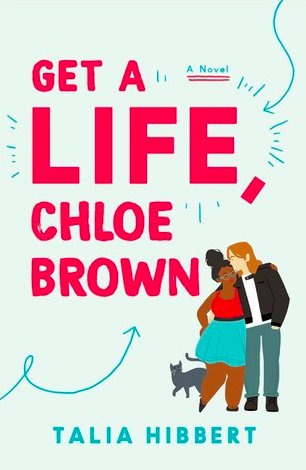
Book: Get a Life, Chloe Brown by Talia Hibbert
Blurb: Chloe Brown is a chronically ill computer geek with a goal, a plan, and a list. After almost—but not quite—dying, she’s come up with seven directives to help her “Get a Life”, and she’s already completed the first: finally moving out of her glamorous family’s mansion. The next items?
• Enjoy a drunken night out. • Ride a motorcycle. • Go camping. • Have meaningless but thoroughly enjoyable sex. • Travel the world with nothing but hand luggage. • And… do something bad.
But it’s not easy being bad, even when you’ve written step-by-step guidelines on how to do it correctly. What Chloe needs is a teacher, and she knows just the man for the job.
Redford ‘Red’ Morgan is a handyman with tattoos, a motorcycle, and more sex appeal than ten-thousand Hollywood heartthrobs. He’s also an artist who paints at night and hides his work in the light of day, which Chloe knows because she spies on him occasionally. Just the teeniest, tiniest bit.
But when she enlists Red in her mission to rebel, she learns things about him that no spy session could teach her. Like why he clearly resents Chloe’s wealthy background. And why he never shows his art to anyone. And what really lies beneath his rough exterior…
It has been several years since I have felt motivated to read novels back to back. Yet here I am, finally with two books in one week! Time for cake! I want to point out before I go any further that 1. I absolutely loved reading this book and 2. SPOILERS ABOUND. If you hate spoilers (’cause these ones are not subtle), maybe just bookmark this post and come back once you too have read the book.
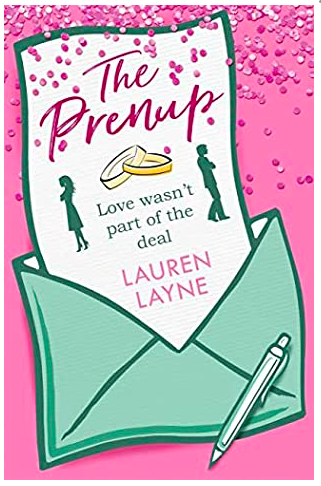
Book: The Prenup by Lauren Layne
Blurb: My name is Charlotte Spencer and, ten years ago, I married my brother’s best friend. I haven’t seen him since.Charlotte Spencer grew up on the blue-blooded Upper East Side of Manhattan but she never wanted the sit-still-look-pretty future her parents dictated for her.
Enter Colin Walsh, her brother’s quiet, brooding, man-bun-sporting best friend, and with him a chance to escape. He’s far from Charlotte’s dream guy as but they need each other for one thing: marriage. One courthouse wedding later, Charlotte’s inheritance is hers to start a business in San Francisco and Irish-born Colin has a Green Card.
Ten years later, Colin drops a bombshell: the terms of their prenup state that before either can file for divorce, they have to live under the same roof for three months. Suddenly this match made in practicality is about to take on whole new meaning…
How did I find this book: I loved Lauren Layne’s The Walk of Shame so I went searching for her and borrowed her only two books my library held.
Having barely read for pleasure in 2020, I wanted to start 2021 by reading in my favourite genre as well as take part in SuperWendy’s TBR challenge with this month’s theme being Comfort Reads. New Year reverting to old readerly me! I do want to point out that this review has a MAJOR SPOILER ALERT!
Book:Love Lettering by Kate Clayborn
Blurb: Meg Mackworth’s hand-lettering skill has made her famous as the Planner of Park Slope, designing beautiful custom journals for New York City’s elite. She has another skill too: reading signs that other people miss. Like the time she sat across from Reid Sutherland and his gorgeous fiancée, and knew their upcoming marriage was doomed to fail. Weaving a secret word into their wedding program was a little unprofessional, but she was sure no one else would spot it. She hadn’t counted on sharp-eyed, pattern-obsessed Reid . .. A year later, Reid has tracked Meg down to find out—before he leaves New York for good—how she knew that his meticulously planned future was about to implode. But with a looming deadline, a fractured friendship, and a bad case of creative block, Meg doesn’t have time for Reid’s questions—unless he can help her find her missing inspiration. As they gradually open up to each other about their lives, work, and regrets, both try to ignore the fact that their unlikely connection is growing deeper. But the signs are there—irresistible, indisputable, urging Meg to heed the messages Reid is sending her, before it’s too late …
How did I find this book: Twitter conversations
Meet Cute: Meg did the calligraphy for Reid and his former fiancee’s wedding invitations. They met when he turned up to approve the design. Their own story starts a year after this event, with Reid approaching Meg to ask why she encrypted the message “Mistake” into the invite. Meg doesn’t really have an answer to this but when Reid tells her that he is leaving New York City because he hates it, she feels that she needs to show him the New York she loves so he can understand the city better.
This inexplicable and kinda weird insistence for Reid to see the beauty of New York City left me feeling confused and I kept reading back over her proposal to find hand written signs across the city to try to understand 1) what’s in it for her and 2) what’s in it for him. I just couldn’t work it out or why he would agree to take part. But this doesn’t really matter because what happens next were these lovely walks through New York City, part game and part tour, where Meg and Reid searching for hand-drawn signs and colours and letters. These regular rendezvous allowed them to build a relationship where they talked and had fun searching for the textual rhythms of the city. These walks were incredibly endearing and were instrumental in revealing Meg and Reid’s selves to each other. These walks become the backdrop to Meg’s relationships with her friends, employers and clients, and Meg hopes that they help her to resolve her artistic block that was keeping her from meeting her work commitments. I liked the way their walking builds up to Meg and Reid’s friendship, and then builds up to Meg and Reid’s intimacy where they both revealed their vulnerabilities. I especially like that when they realised that they were going to be having sex, their is a long break involving walking and catching transport with “no self-respecting New Yorker PDAs on the subway” intimating their restraint until they reached his apartment. The walking allowing them space for reflection and thought, a way for consent to be reached through the clarity that time and thinking while walking can give you, and the loveliness of walking through their city to their amatory destiny.
Meg’s problem however is that she is a not a confrontationist. She would rather friendships and relationships peter out than confront problems and grapple with possible arguments or fights that need to be resolved. Throughout the book, this becomes a major issue which she needs to overcome with her best-friend Sibby and then with Reid too. She slowly builds up to being able to argue with them and resolving these arguments. Which was fine. It was lovely. It showed care. But it made me a tad bored. Not bored enough to stop reading, but still, bored.
And then the very odd end of the book happened when all of a sudden, instead of reading a romance (THIS PART IS THE SPOILER)…. I’m reading a fraud case, and Reid is an informant (still waters run deep!) and is now in witness protection, and Meg has to decode coordinates??? Just. Really? Why did this just happen? I feel confused again. I feel cheated. I know that I was bored in parts but this wasn’t a change of pace as much as a change of book. So this was a romantic suspense novel and I didn’t even realise it. Switch and bait. I grumbled, I did. This ending really annoyed the shit out of me because of this. It felt fabricated and orchestrated due to not enough tensions being available in the relationship. I don’t mind a story that goes from no drama to high drama in a flash but it felt out of kilter with this particular story and its conciliatory strengths.
I do want to point out one that I stuck with the book because it was beautifully written. The turn of phrase, the loveliness of the narrative. The lettering and planner details gave a rich experience of the text, and though I personally don’t pay lots of attention to details (I just buy whatever is on offer), their description in this book kept me engaged. I also absolutely adored the city walking. I am an urban bunny, I cannot bear bushwalking as I find nature rather boring (oh look – there’s a tree. And just beyond it another tree just like it). I’m glad nature exists and all, but I’m happy to protect it by not going to it. In the city though, the thrill of noises and sirens, the smells, and the crowds (this books is written in a pre-Covid world). Ah! I just loved the city as character in this book and it worked its magic on me.
Will they last: I’m undecided on this one. Do I think that Meg and Reid have a relationship that they can sustain for all their lives – Yes. Do I think that Reid can live 25/40/60 years in a city he once hated? I’m unsure. Which is the whole crux of their relationship. Meg loves the city and somehow Reid claims that he now loves it too because he saw it through her eyes but I remain unconvinced. No doubt they love each other. But I doubt Reid loves NYC. They’re really going to have to think carefully about which neighbourhood they choose to live in if they want to ensure that city living doesn’t become their insurmountable problem.
Feelings: Overwhelmingly though, this book was heavy with sadness. Both Reid and Meg carry their worries on the page. From Meg’s inability to vocalise her problems to Reid’s skin flares making it impossible to hide the stress he wished he could internalise. Though there are some funny exchanges and witty repartee, sadness was stronger in this book as an emotion. And perhaps this is why I did not enjoy the book as much as I would have wanted. With the sadness of living in plague times, with the political zeitgeist being one of oppression and obfuscation across the world, and all the other usual personal problems I carry in my soul, I was really wanting a lighter book to read. I needed a light breeze and Love Lettering was certainly not that for me. Would I recommend it to others? Yes. But it definitely was not the right book for me. I sought a comfort read but I didn’t find comfort.



 Shallowreader