On Reading: Why I read

Every day and throughout the year, I spend a substantial amount of my time reading about reading. From scholarly articles to academic books to chronicles of reading and reading memoirs. I am going to post a series of short observations on the books (and the occasional articles) that I have been reading particularly reflecting on the presence (or lack thereof) of romance fiction, and on how I feel my perceptions of reading aline with the authors.
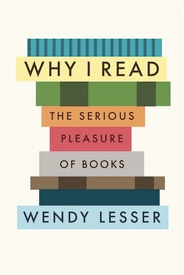
Why I read by Wendy Lesser

Why I read by Wendy Lesser

Why I read: the serious pleasure of books by Wendy Lesser

published by Farrar, Straus and Giroux; 2014


In her book “Why I read” Wendy Lesser writes that she has tried to have a broad definition of literature, including plays, poems, essays and novels, “from traditional literary forms to mysteries and science fiction, memoirs and journalism” (p 5). In describing such broadness I was hopeful. A female author, the wave of attention that romance has received over the last five years and a claim to wide reading. However, I was disappointed that, with the exception of a brief mention of fairy tales and the marriage plot (Lesser p37) Lesser does not include any romance fiction in her book. However, she does lauds Henry James’s female characters and says that they “do not come ready-packaged with a character that accompanies them through life, like a kit-bag of charms carried by the generic hero of a fairy tale”. Continue reading →
On Reading: What we see when we read

Every day and throughout the year, I spend a substantial amount of my time reading about reading. From scholarly articles to academic books to chronicles of reading and reading memoirs. I am going to post a series of short observations on the books (and the occasional articles) that I have been reading particularly reflecting on the presence (or lack thereof) of romance fiction, and on how I feel my perceptions of reading aline with the authors. 

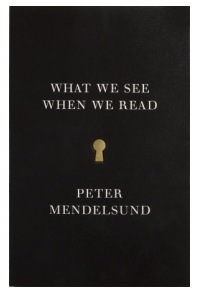
What We See When We Read by Peter Mendelsund

What We See When We Read by Peter Mendelsund

What we see when we read: A phenomenology with illustrations

by Peter Mendelsund

published by Vintage Books; 2014

I have mixed feelings about the way I read this book. I read it during grabbed moments, between meals (including one I burnt – a good indicator of the level of my engagement with this book yet not so good for the nourishment of my family), on transport, in that half hour in the morning before anyone else rises, rather than immersing myself into it and reading it in a sitting. This has affected the way I have related to the book because it is not a book to be read so haphazardly. It is a book that needs quiet and concentration. Peter Mendelsund is a lauded book cover designer and an associate art director. The New York Times ran an interesting article on him (and this book). I liked Mendelsund’s visual and textual ruminations on reading. His conscious exploration of what it means to be reading, how we view the texts, the images in our mind, the whitespace and ideas that occur on the page as well as the visualisations that the written words create in our own minds. He writes:

All good books are, at heart, mysteries. (Authors withhold information. This information may be revealed over time. This is one reason we bother to turn a book’s pages.) (Mendelsund, 2014, p 122)

Continue reading →

On Reading: The Last Book

Every day and throughout the year, I spend a substantial amount of my time reading about reading. From scholarly articles to academic books to chronicles of reading and reading memoirs. I am going to post a series of short observations on the books (and the occasional articles) that I have been reading particularly reflecting on the presence (or lack thereof) of romance fiction, and on how I feel my perceptions of reading aline with the authors. 

Reinier Gerritsen's The Last Book

Reinier Gerritsen’s The Last Book

The Last Book by Reinier Gerritsen (photographer); introductory essay by Boris Kachka. Published in 2014.

Boris Kachka, in the introduction of The Last Book  discusses futurist Negroponte’s prediction that the printed book will disappear by 2015. Though this prediction has not been realised, ebooks have indeed impacted the way we read. On transport, we get fewer glimpses at a stranger’s individual taste. Where print books were a window to a person’s self, tablets and ereaders, Kachka says, now act as a mirror. Phototgrapher Reinier Gerritsen observed that the incidence of people reading on trains was diminishing so he wanted to document the reading that was still being undertaken on transport.

Gerritsen’s photographs of commuters with their print reading choices depict commuters whose reading choices are broad. There are classics, bestsellers, eclectic and translated titles, children’s books, fiction and nonfiction. There are more male than female authors and more male than female commuters represented in this book. Continue reading →

Fave 2014 reads

It is that time of the year again when favourite lists are put out for all to read. It is a bit early for me, as I feel that I have a whole month of reading ahead of me. But as I will be on 702ABC talking about my picks tomorrow, I thought I’d list my books from now. Having read over 80 books this year, I still feel I am reading well below my 2012 record of 367 books though I am up on last year’s effort. Of course, my PhDing ways do take me away from leisurely reading somewhat. If you want to look at my year’s reading here is my Goodreads list (though it is missing some titles).

FAVE READING 2014:

Picture book:

Supertato – Sue Hendra

Sue Hendra SupertatoA superhero potato fights an evil pea for supermarket domination. Funny, awesome and a guaranteed crowd pleaser amongst the under 5s (especially great because you get to use the sentence “This jelly tastes of pea” when reading to kids).


.

Non-fiction:

Love Life – Rob Lowe

Rob Lowe Love LifeRob Lowe writes so beautifully that there are times that I stop reading and hug this book to my chest. Poignant essays about his life growing up in Malibu, his love for his children and his wife, his alcoholism, his family history (or what he so beautifully calls his epigenetic legacies), his career choices as well as stories about other actors and fame. It was a tad touch and go when he made one disparaging remark about libraries. I nearly had to break up with my fictional boyfriend but then I kept reading and I forgave him for his fleeting thought. This book made me feel so happy and allows me to feel good about all those TigerBeat and 16 magazines that I so fondly remember buying. Aahhh – nostalgia over my teen idol poster boys. These days I would be called a Fangirl. (And as  a pssst! aside – I do track the #rob lowe hashtag over at Tumblr for purely scholarly reasons). Continue reading →

Belated Book Blogger Blackout and Bullies

I am writing this post in support of the Book Blogger Blackout also known as HaleNo. A quick TL;DR for my readers who are not part of the online book community is that a few weeks ago The Guardian newspaper published author Kathleen Hale’s account of her obsession and consequent harassment and stalking of a reader reviewer who gave her a one star review on Goodreads. For those of you who would like more detail I direct you to Sunita’s Blogger Blackout post as well as Dear Author and BookThingo for  longer explanations.

Continue reading →

Charlotte Lamb retro comfort read

I am home sick with laryngitis and a chest infection AND a sick, feverish son. For the first few days I attended my own pity party and what is better than a comfort read at a pity party? A Charlotte Lamb angsty romance!


Charlotte Lamb The Girl from NowhereThe Girl From Nowhere

c 1981

Suki Black is a successful singer who exudes sensuality on the stage. However off the stage she is sheltered by her manager and his wife, Buddy and Rosie who are more like parents than managers. As the story develops, you discover that Suki was abandoned as a baby and was brought up in a refuge/home/school. Having moved out at 16, she was discovered singing in a bar by Buddy and Rosie at 17 and had been living with them for the past 5 years – working her hard but treating her well and lovingly.

Enter the hero after a kickass performance that opens the book. Joel Harlow is a  smouldering, dictating asshat of a hero who keeps turning up like a bad penny harassing Suki. At no time did I feel any warmth toward industrial magnate, Joel (whose description reminded me of Jamie Arrogance Packer). Continue reading →

My travel reading and a sense of setting

I’m rubbish at reading while on holiday. Where other people relax at the beach with a book, I reject all reading materials as I am either in the water swimming or racing around looking at every museum, shop, historical building that is close by. To add to this, my latest trip was a combination of work and play (I marked student assignments, along with PhD related conference paper writing and archive visiting), which even further lessened my reading time.

However, I did manage to read 5 novels while I was away (I won’t count the numerous picture books I read to my cousin’s kids). So for this blog only I will write about the place I read each book in as well as the book.

Alexander the Great statue in Thessaloniki

Alexander the Great statue in Thessaloniki

Before I discuss these other books I need to point out that I am both impressed and horrified that I have reverted in my reading habits. 4 years ago, I bought myself a SONY ereader and during an 8 week holiday I did not enter a single book shop and I did not buy a single book. All my reads were downloaded from my local library and Project Gutenberg. My luggage was liberated. Hallelujiah to more space for more shoes. But my latest trip has shocked me. Not only did I not use my tablet for reading but I found myself carting print books across the globe. Thoughthey are much more cumbersome, I love them soooo much more than ebooks. I can write in the margins (I don’t but I could if I chose to), I can dog ear pages (I do), I can litter my book with post it notes, bookmarks made of receipts, ticket stubs, serviettes and beer coasters. Each item becoming in itself a souvenir of the moment that I was reading. I am enjoying my reversion. I want a badge that says “Tried ebooks, didn’t work, print is my swag”. I also want to point out that I always forget to take photos when I am on holiday. I guess I am too busy being on holiday to document it. Continue reading →

Appropriated mythology

I’m back on 702ABC again today. We are talking about appropriated mythology*. It thought it was an apt subject seeing that I am in Greece this month. I’m currently staying at my aunt’s home** on the island of Poros (Greece’s only male island)***.

The Twelve Olympian gods and goddesses of the Greek Pantheon / by Flickr user Dunechaser CC by NC SA 2.0

The Twelve Olympian gods and goddesses of the Greek Pantheon / by Flickr user Dunechaser CC by NC SA 2.0

Whenever I am in Poros, I have a sense of Greek gods and historic tales happening about me. I am less than 100 kilometres from where Paris kidnapped Helen spurring Menelaus to start the Trojan Wars. There is a Temple to Poseidon on the hill behind me. Sphairia is the ancient name for Poros and is where Theseus was conceived when his mother Aethra waded into  water inspiring lust into Poseidon (damn Greek gods). Continue reading →

Nymph kissing Mortal Boy

A few weeks before I left Australia for Greece, I came across Tonya Alexandra’s Nymph, Book One of The Love Oracles. Being one to judge a book by its cover, I fell in love and then I fell deep deep deeply in love with the blurb:


nymphAn Idyllic Greek Island

Obsessed demigods

A fallen nymph

A Mortal Boy

Merope, a beautiful but faded star nymph, is banished to Earth for displeasing the gods. She tries to fit in, go to school and live a normal “human” life. And then she meets Lukas. But relationships between goddesses and men are forbidden.

Will their love grow? Or will Merope and Lukas feel the wrath of the gods?


I swooned before I opened the first page. However, I was patient and did not start reading Nymph until I was on a ferry leaving Piraeus heading for Poros, a small island in the Argosaronic gulf near the Peloponnese. The ferry ride to Poros is magical. I sit on the upper deck, the wind is gentle, the sea is calm and the ferry passes by container ships and yachts as it starts its journey first to Aegina, then the volcanic peninsula of Methana before arriving in Poros, an island separated from the mainland only by a 200 metre wide strait. Along the whole way, the sea meets the mountains, the diffuse light filters through the clouds as I am quickly immersed in the story of Merope and Lukas. Continue reading →