Ten authors and their tenth book

My bookgroup celebrated its 10th anniversary this week. The topic for this month was 10. So I decided to look at my favourite ten fiction authors and their first and tenth fiction books. Five of the authors were amongst my favourite authors in 2001 and the other 5 are amongst my favourites in 2011. My aim was to see if each author improved with every book, whether they were they consistently good and whether or not they managed to sustain my interest. I am listing the authors in alphabetical order not in order of preference.

Isabelle Allende

1st title: The House of Spirits (loved it)  10th title: City of Beasts (I have not read this title)

I remember falling in love with the intricate lives that Allende wrote about. Her books were like a perfume that I could sense when I would sit and read but by the time Paula (let alone City of Beasts) was released I was no longer interested in reading more of Allende’s books.

Suzanne Brockmann

1st title: Future Perfect 10th title: The Kissing Game (I haven’t read either of these titles)

The first Brockmann book I recall reading was Prince Joe (her 8th book) and she quickly became an autobuy author. I discovered her Tall, Dark & Dangerous series (Silhouette) and then became completely taken by her Troubleshooters series which are full of action, shooting, nefarious terrorist plots and lurve. It’s like watching/reading Team America sans the crass humour. However, as much as I enjoy her books I have not felt compelled to buy any books since Into the Fire and I am now happy to wait to borrow a library copy.

Douglas Coupland

1st title: Generation X (loved it) 10th title: Eleanor Rigby (I have not read this title)

I read Generation X within months of its release and it was like a revelation. It was modern, it was disinterested, it was wry and I was in love with Coupland. Life After God, for years, was a favourite book yet my interest waned rapidly after reading Polaroids from the Dead (non-fiction) and I have not been tempted to read Eleanor Rigby.

Jennifer Crusie

1st title: Manhunting (I have not read this book) 10th title: Crazy for You (A great read)

I enjoyed this book, stalker, Quinn, Nick and all. The first Crusie title I read was Charlie All Night which I reread every few years (and still enjoy). Crusie’s sharp, biting dialogue is fun and her characters’ relationships and friendships make me want to be friends with them. My personal favourites are Welcome to Temptation (11th title), Bet Me (14th title) and Agnes and the Hitman – co-written with Bob Mayer (15th title). I feel that these 3 titles set the contemporary romance literature benchmark.

Gabriel Garcia Marquez

1st title: In Evil Hour (I have not read this book) 10th title: there is no 10th novel (I could cheat and count his novellas but I won’t)

I have a shameful secret. I know that in the early 90’s I read (and re-read) both 100 Years of Solitude and Love in the Time of Cholera. I recall waxing lyrical about them to a guy I was interested in and I saw it as a “sign” that he then read them and we went out and, over dinner, spent a night discussing them both. Both my copies are dog-eared and marked. Now here is the shameful part. I cannot for the life of me recall anything whatsoever about the books (except that I loved them at the time). I could have chosen a different fave author to include, one whose works I did remember. But I chose to include Marquez because I don’t think his books resonated with me the way I initially thought they had.

Rachel Gibson

1st title: Simply Irresistible (enjoyed it) 10th title: I’m in No Mood for Love (loved it)

I read I’m in No Mood for Love before Simply Irresistible. Having read, and loved, several of Gibson’s titles I tracked down her backlist and read through them all. I thoroughly enjoyed them. I’m in No Mood for Love also stands out for me because it was a rare romance that I recommended for my husband to read and he too enjoyed it. Simply Irresistible was good and fun but I didn’t recommend it to my husband….(which is telling in itself).

John Irving

1st title: Setting Free the Bears 10th title: The Fourth Hand (I have not read either of these books)

I remember watching the movie of The World According to Garp and my sister and I pooling our money together to buy the book. And we both loved it. We continued to read as many of Irving’s books as we could find. And I particularly recall thinking that A Prayer for Owen Meany was a powerful tale. However, by the time A Son of the Circus was released, once again, my interest had waned.

Milan Kundera

1st novel: The Joke (a great read) 10th title: there is no 10th novel (though there are a number of short stories)

This is another author adoration that I had due to needing to read the book of a movie that I loved. And as wonderful as The Unbearable Lightness of Being was on film, the book far surpasses it. Yet, it is The Farewell Party remains my favourite of all Kundera’s books.

Susan Elizabeth Phillips

1st title: The Copeland Bride (I have not read this book) 10th title: Nobody’s Baby But Mine (An enjoyable read)

I love that Susan Elizabeth Phillips (SEP) creates unlikeable characters whose actions are awful and yet by the end of the book you want them to have a happy outcome. This is particularly true in Nobody’s Baby but Mine in which the heroine tricks the (sports) hero into impregnating her for she decides that she wants to have a child that is not bright. Her stereotypes and deception grate yet I love the complex relationships SEP builds and reconciles. I feel that she is another benchmark romance author. I look at her list of published titles and though her earlier books were good, her Chicago Bears series are outstanding and it is her 17th title, Match Me If You Can, that is my favourite of all her books.

Julia Quinn

1st title: Splendid (I have not read this book) 10th title: An Offer from a Gentleman (A lovely, sad Cinderella story)

Up until a year ago, I had no interest in reading historical romances. I didn’t mind historical fiction or fiction that was contemporary when it was published but now is historical (ie, Jane Austen) but, I’ll admit, books where women swooned over dukes, earls, or barons left me cold. I decided to overcome my biases and started with a very early Julia Quinn novel that did not grab me at all. I then read When He Was Wicked and fell in love. By the time I read An Offer from a Gentleman I was hooked and just as I was tiring of the 8 book Bridgerton series, the last book On the Way to the Wedding had me on the edge of my seat anticipating how the relationship issues were going to be resolved. And this book was 5 after her 10th title! Simply gold!

The thing that stands out more than anything else is that my reading tastes have changed markedly over the last 20 years. 20 years ago I was reading predominately literary fiction or non-fiction smattered with some category romances and the occasional romance. I devoured classic literature and loved to read conceptual modern fiction too. By the late 1990’s I felt exhausted by the constant search for the meaning of life and (for the most part) stopped reading literary fiction. Time has yet to test whether I’ll feel the same way about my current favourites (though to be fair Jennifer Crusie and Suzanne Brockmann have been faves for over a decade already). But what I do find interesting is that most literary authors’ strongest novels are at the beginning of their writing life whereas it seems that the inverse is true for the romance authors I have listed above. Where I may have enjoyed their first few books, it is their subsequent publications that have drawn me in and hooked me as an avid fangirl.

Obviously, I am biased. I love reading romance novels so it is impossible for me to be objective. However, I was a fan of literary fiction for a lot longer and much earlier in my youth. And why do I think my reading preferences changed? I think I might leave that question for another blog post.

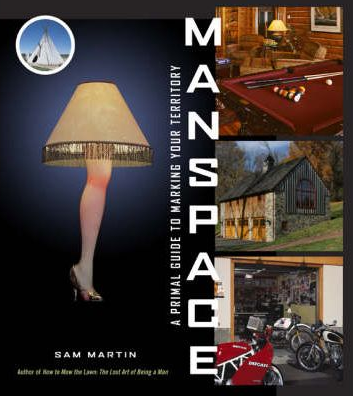
So whether you call it your mancave, manroom, manshed or manspace this book is for you

Manspace: A primal guide to marking your territory

by Sam Martin

a shallow review

Home decorating books, for the most part, are glitzy, glamorous and though beautiful, they are highly impractical. As much as I would like Michael S Smith or India Hicks to help me fine tune my home, the reality is that most of the books in this genre are either low end DIY guides or high-end “hey look! you too can have a 747 hangar just like John Travolta“.

However, Manspace is one of those books that falls well within the realm of practical, visually pleasing and humanly possible examples of interior decorating. Showcasing rooms of all styles with predominately male interests, from the classic car collector to the tech geek to the international hunter. With chefs kitchens, theatres, model railways, baseball collections, cards, wine distillers, houseboats, caravans and rock-climbing walls every manspace in this book reflects their owner but also gives the reader the scope to imagine creating their own space.

I live in a testosterone driven house. 3 males and a (used to be) male dog. I was never a girly girl but once I had sons I felt the need to buy chintz.  Now, apart from a set of flowery tea cups and my many romances strewn around the house, my home has masculine undertones. Ships, maps, and trains are present in most rooms and, of course, there is the garage for the spare TV, nerf gun wars and bikes. My men love their “manspaces” and this book has helped inspired them. So whether you call it your mancave, manroom, manshed or manspace this book is all about encouraging men to reclaim their homes and leave their decorating mark.

VaVeros’s Favourite Australian Picture Book Picks

With Aussie Author month coming to a close I wanted to highlight some fabulous Australian authors and illustrators in the realm of children’s picture books. These are my surefire picks.

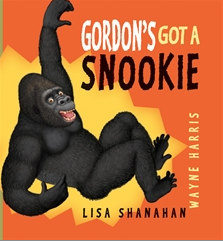
Gordon’s Got a Snookie by Lisa Shanahan and Wayne Harris

Gordon’s a silverback brought in to service the ladies. The ladies expect an alpha gorilla but they get a beta instead. This book is fabulous. It’s about teasing, loneliness, comfort and lurrve! I have bought many copies of this book – many for family overseas.

.
Flame Stands Waiting by Corinne Fenton, illus by Sebastian Ciaffaglione

You know those picture books you pick up and start reading and you suddenly feel that you are standing in the illustration as it is incredibly life-like and mesmerising. Well, this book is it. The story of the only horse on the Merry-Go-Round that does not move, the fun park lights come to life and the emotions of the kids seem quite tangible. A gem of a book.

.

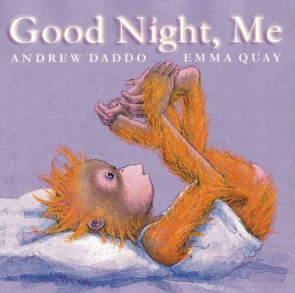
Goodnight Me – Andrew Daddo, illus. Emma Quay

Goodnight Me is a sweet, lovely bedtime book for young children. It’s the kind of book that has your 3 year old curling up to sleep with their board book copy.

.

Lilli-Pilli – The Frog Princess by Vashti Farrer & Owen Swan

A historical picture book romance with kings, queens, dukes and the search for the perfect match. Poor Lily though has frogs legs. The illustrations are dream like and in keeping with fairytales.

.

Leaf – Stephen Michael King

Quiet, introspective with a childlike, whimsical perspective of the world. Everytime I read a book by Stephen Michael King I want to climb a tree and watch birds flying around for the whole afternoon. He gets to you that way.

.

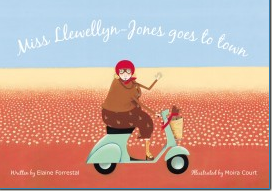
Miss Llewellyn-Jones Goes to Town by Elaine Forrestal, illustrated by Moira Court – I love the cadences and rhythms in this gorgeously illustrated book. I wish I could get a series of prints for my kitchen from this book too. Love it.

.

.

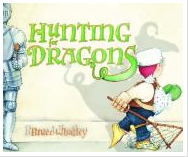
Hunting for Dragons by Bruce Whatley

You know how as a child you walk around the house searching for that monster and it is always lurking close by appearing in everyday movements and items. Well, Bruce Whatley has this imagining down pat. I love pouring over all his books but this one, with its dragon hunter, is a standout choice.

Romance fiction, to me, is somewhat akin to science fiction

I love reading romances. I love the relationships, I love the internal monologues, I love reading both the male and female points of view of the same events. I love reading about characters grappling with either internal issues or external events beyond their control and overcoming these problems together. I absolutely adore the Happily Ever After endings to such a point that I will kill fairies to ensure that I get the ending that I most desire. And most of all, I love that I have to leave my cynical, snarky self at the door for the duration of reading and escape to some other world, some other planet where the relationship build ensures that no matter what obstacles, issues, evil nemesis, glamorous next-door neighbours, indecisions, friendship pressures and other alien, droid or spaceship interventions, the hero and the heroine prevail and end up with one another. Yes, dear reader, romance fiction, to me, is somewhat akin to science fiction.

I grew up on a street that had 2 parish churches (different denominations) and every Saturday and Sunday we would sit on our front verandah and watch hourly processions of brides and grooms in their various Jaguars, Mercedez Benzs, convertibles, Holden Monaros, horse-drawn carts, and ribbon strewn silver Bugattis passing our home. Each and every time my parents would jokingly say “Another couple going to their hanging”. This was the first plant in my mind that marriage was a cynical pursuit. It was a prison that was not to be coveted.

A much loved (divorced) aunt, at weddings, would always greet me with “May you remain on the shelf, and may it be made of steel”. Hmmm!

Add to the mix that I was a Mad Magazine aficianado. Mad gave me an understanding of satire and irony and taught me to question everything. And I loved Dave Berg’s The Lighter Side of…. which always poked fun at relationships.

So any time I would hear any gushings of “But I lurve him” from the girls at school or “He’s such a good pasher” or “Oh My God! He bought me a fur coat” (I mean, really? Aside from the obvious animal cruelty issues, It’s frickin’ Sydney! It doesn’t get cold. That’s not love. That is stupidity). I would roll my eyes and think “get some perspective”.

Don’t get me wrong here – I absolutely adore my husband (and for the record – I walked down the road to my wedding ceremony – no cars) and, despite my jaded outlook, I truly believe that for most people, there is a love match. Some will be lucky enough to find it at a young age and have it last for many years (such as my friend’s grandparents who were married for 82 years), some will find it for a short intense period (Britney Spears and Jason Alexander married for a day comes to mind) but most people will be somewhere in between. And when it comes to my reading choices, I am curious, I am interested in reading about that journey of coming together. I predominately read romance fiction but I will happily read biographies with romantic elements because I love to examine and understand the circumstances around a romantic pairing as most of these pairings will be undertaken with an optimism that I find life affirming.

I have to say that I deeply dislike love stories, particularly tragic, grief stricken tales where no-one is happy and the moral is that misery gives you a deeper understanding of humanity. It may win authors literary awards but it certainly doesn’t compel me to buy any of their books. I know that life has tragedy and that death is not an option but I choose to focus on more positive aspects in life. It makes the reality of life so much more bearable.

So why would I equate romance to science fiction and not to fantasy. Well, for me, fantasy fiction is not possible. It is entering a realm that is only imagined, flights of fancy that will never be realised no matter how vivid or thrilling the story may be. But science fiction is grounded in scientific possibilities. It may not be possible in the immediate future, but just like the man on the moon, it has such wonderful outcomes should the fiction be realised. And don’t we all know how wonderful romance can be when it comes to fruition.

Reading avenues for the Shell-Shocked, Time-Strapped Reader: From First-time Parents to Corporate Workers

For many people, reading fiction means escaping into another world, losing yourself in the setting, becoming one of the characters in the book and feeling that you are there too. To do this, as a reader, you need uninterrupted time, seamless moments to relish the language, space and activity taking place but, unfortunately, when your workplace commands much of your waking time or a newborn enters your household, uninterrupted time may be only half an hour whether it is your commute or your rest time between chores and baby napping. And half an hour for most readers is not sufficient to immerse and lose yourself in a novel.

For those of you who need to see the written word at least once a day, who need that tactile sense of paper and no electronic devices and for those of you who miss reading but can’t seem to delve into characters lives like you did in those pre-work committment, pre-baby  times, here are a few reading alternatives that I have suggested to library borrowers who come enquiring. You may want to consider:

Short Stories:

Succicint, minimalist with an economy of words, the short story is a great place to start rediscovering reading. Short stories range from 2000 to 20 000 words making it a great entry point for many time strapped readers. Anthologies tend to have a thematic vein with a variety of authors. Some great examples are Girls Night Out, Zombies vs Unicorns, Steampunk. The other short story style is the one author with a variety of their own stories: Margo Lanagan’s Black Juice, Steven King’s Four Past Midnight, Tobsha Learner’s Yearn. Some of these stories stand alone and others are interlinked. Short stories are a great way to explore new genres, new author voices or just delve into a previously loved writing theme.

Literary Magazines:

There are many literary magazines all of which have short fiction, essays, poetry and the like. There is the New Yorker, Granta Magazine (thematic based approaches to compiling reading materials), McSweeney’s amongst others.

Observers:

Essayists, comedians, people who write about the funny, peculiar occurrences that they observe are often great reads for the busy person. Often a collection of their works can be dipped in and out of over a period of time. Some of my favourite observer/essayists are David Sedaris, Laurie Notaro, Adam Gopnik, Gervase Phinn.

Non-Fiction:

Non-fiction is a fabulous antidote to the reader who misses reading but not necessarily fiction. Dipping in and out of most non-fiction is a simpler task than with novels as they are fact driven. Wit the exception of biographies, most non-fiction doesn’t require the reader to emotionally attach themselves to character lives (though, that said, sometimes it is harder to let go of the real life people you read about in some history books). DK Books have great information design that facilitates dipping in and out of books, some arm chair travelling, dreaming of artists, reading about the military, atlases of history, unattainable homes in architecture books or science trivia books can be very rewarding reads.

Children’s Fiction:

In general, children’s novels are much shorter than adult novels and there is a plethora of enjoyable reading. From Dick King Smith’s The Waterhorse, Paul Stewart & Chris Riddell’s Far Flung Adventure Series to the darker Sisters Grimm series many of these stories often surprise adults with their themes and quality writing.

Mythology:

With the prospect of reading tales from around the world, reading mythology is a rediscovery of tales told either at the dinner table or in the classroom. From Aboriginal dreamtime, Homer’s Odyssey or Arthurian tales mythologies may be shorter reads but they have inspired many generations with their epic adventures.

Poetry and Lyrics:

Poetry and lyrics are the delivery of ideas in rhythm and cadence that stays in your mind long after you have re-shelved the book you read it in.

To add to all these, there are newspapers, comics, graphic novels and many other shorter writing options that can be suggested to readers. Websites, blogposts, zines and a number of online options are also available but for the purposes of this post I wanted to focus purely on the print reading options that are available.

For the busy worker, the lack of reading opportunities can sometimes go un-noted  for many years as it occurred incrementally but for the first-time parent this transition isn’t a slow one but one which seems like a severance of a body part. And though some of the above suggestions may seem overly obvious, when someone is overtired it is easy to overlook simple ideas until someone mentions them to you.

So whether you are a time-strapped executive who is working 12 hour days, a cleaner who physically is exhausted at the end of a long shift or a new-time parent struggling to find any time to themselves, hopefully the above avenues are helpful and bring lots of reading pleasure.

Australian romance authors – how many have you read? VaVeros’s list

So I’ve been a lazy blogger and done a straight cut and paste from Bookthingo. Read on!

How many Aussie romance authors do you know?

Australia is home to a lot of talented authors in the romance genre. Here’s a list of romance authors from the Romance Writers of Australia website. How many authors do you know?

Authors in BOLD are authors you’ve tried at least once.
Authors UNDERLINED are in your To Be Read pile.
Authors in ITALICS are authors whose work you’re planning to try soon.
Mark autobuy authors with an asterisk (*).
If an author has written a keeper for you, add the book title next to the author’s name.

This meme was created to celebrate Aussie Author Month 2011.

1. Alison Stuart – Historical
2. Alli Kincaid/Allison Rushby – Women’s Fiction, Young Adult
3. Ally Blake – HM&B Sweet, Sexy Sensation
4. Amy Andrews – HM&B Medical
5. Anna Campbell – Historical
6. Anna Cleary – HM&B Sexy Sensation
7. Anna Jacobs – Historical Sagas, Contemporary
8. Anne Gracie – Historical, Romantic Comedy
9. Anne Oliver – HM&B Sexy Sensation
10. Anne Whitfield – Historical
11. Annie West – HM&B Sexy, Sexy Sensation
12. Astrid Cooper – Speculative Fantasy, Paranormal
13. Barbara Hannay – HM&B Sweet
14. Barbra Novac – Erotic Romance
15. Beverley Eikli – Historical Intrigue
16. Bronwen Evans – Regency Historicals
17. Bronwyn Jameson – HM&B Desire
18. Bronwyn Parry – Romantic Suspense
19. Bronwyn Stuart
20. Carol Warner – Rural, Contemporary
21. Cassandra Cornell
22. Cathleen Ross – Erotica, HM&B Spice Briefs
23. Cathryn Brunet – Contemporary
24. CC Coburn – HM&B American Romance
25. Charmaine Attalla
26. Cheryl Wright – Romance
27. Christina Phillips – Ancient Historical Romance
28. Christine Stinson – Women’s Fiction
29. Christine Wells – Historical
30. Claire Baxter – HM&B Sweet
31. Daphne Clair/Laurey Bright – Historical
32. Deborah Challinor – Historical fiction
33. Denise Rossetti – Erotica
34. Dora Braden
35. Eleni Konstantine
36. Elisabeth Rose – Contemporary
37. Elizabeth Rolls – HM&B Historical
38. Emily Gee – Fantasy
39. Erica Hayes – Fantasy
40. Fiona Lowe – HM&B Medical
41. Fiona McArthur – HM&B Medical
42. Gail Symmonds – Time Travel/Historical
43. Heather Boyd
44. Heather Brown – Historical
45. Heather Garside – Historical
46. Helen Kirkman – HM&B HQN
47. Helene Young – Suspense
48. Isolde Martyn – Historical
49. Jan Colley – HM&B Desire
50. Janet Woods – Women’s Fiction
51. Jennie Adams – HM&B Sweet
52. Jennifer Brassel – Contemporary, Young Adult
53. Jess Dee – Sexy romance
54. Joan Kilby – HM&B SuperRomance
55. Joanie MacNeil
56. Joanna Challis – Historical
57. Kandy Shepherd – Romantic Comedy
58. Karlene Blakemore-Mowle/Karly Lane – Romantic Suspense
59. Kate Loveday – Contemporary, Historical
60. Kelly Hunter – HM&B Sexy Sensation
61. Keri Arthur – Urban Fantasy, Paranormal
62. Keziah Hill – Erotica
63. Kiki Lon – Young Adult
64. Kirsty Brooks – Crime Comedy Romance
65. Kylie Griffin – Paranormal Romance
65. Laura O’Connell – Inspirational Women’s Fiction
66. Lilian Darcy – HM&B Medical
67. Lillian Grant – Romance
68. Lisa Heidke – Women’s Fiction
69. Loretta Brabant – Contemporary
70. Louise Cusack – Fantasy
71. Lucinda Brant – Historical romance & mystery
72. Lucy Clark – HM&B Medical
73. Lynsey Stevens – HM&B Sweet
74. Maggi Andersen – Historical
75. Maggie Nash – Erotica, Paranormal, Suspense
76. Mandy Magro – Australian rural fiction
77. Maree Anderson – Paranormal, speculative fiction, fantasy
78. Margaret Tanner – Historical
79. Marion Lennox – HM&B Medical, Sweet
80. Mary Hawkins – Inspirational
81. Maxine Sullivan – HM&B Desire
82. Melanie Milburne – HM&B Medical, Sexy
83. Melissa James – HM&B Sweet
84. Michelle Douglas – HM&B Sweet
85. MJ Scott
86. Nicola Marsh – HM&B Sweet, Sexy Sensation
87. Nicola E. Sheridan – Fantasy / Paranormal romance
88. Nicole Murphy – Paranormal
89. Nikki Logan – HM&B Sweet
90. Noelene Jenkinson – Contemporary
91. Paula Roe – HM&B Desire
92. Paula Vince – Exciting, mysterious and suspenseful romance
93. Rachel Bailey – Silhouette Desire
94. Rhian Cahill – Erotic Romance
95. Robyn Donald – HM&B Sexy
96. Robyn Grady – HM&B Desire
97. Rowena Cory Daniells – Speculative Fiction, Children’s
98. Sandy Curtis – Suspense
99. Sara Bennett/Sara Mackenzie – Historical, Paranormal
100. Sami Lee – Contemporary
101. Sara Hantz – Young Adult
102. Sarah Mayberry – HM&B SuperRomance, Blaze
103. Sharon Archer – HM&B Medical
104. Shona Husk – Paranormal
105. Stephanie Laurens – Historical
106. Sophia James – Harlequin Historical
107. Suzanne Brandyn – Contemporary
108. Tamara Gill – Historical
109. Tina Marie Clark – Children’s
110. Tina Duncan – HM&B Sexy
111. Tracey O’Hara – Paranormal
112. Tracie Sommers – HM&B Spice Briefs
113. Trish Morey – HM&B Sexy
114. Valerie Parv – HM&B Sweet
115. Vonnie Hughes – Historical Intrigue
116. Yvonne Lindsay – HM&B Desire
117. Zana Bell – Historical, Superromance

Authors read: 19
Authors in TBR: 3
Autobuy authors: 0

I’ve read more Aussie Romance Authors than I thought I had. I tend to choose many of the overseas authors (which probably explains why I have no autobuy authors off this list). I think that I’m also a fly by the seat of your pants reader as I don’t tend to plan ahead with my TBR list.

So let’s see what this month brings!


Australian Romance Readers Convention 2011 – Part 2

In my day to day life, I have a few acquaintances who read and enjoy romance novels but it is a rare occasion to be surrounded by romance novel enthusiasts and authors and attending the Australian Romance Readers Convention gives you a chance to talk talk talk about romance novels without the fear that you are getting tiresome.

Here is the second part of my twitter influenced take (that is: 140 words or less per session)

Dinner – Bling and the 2010 Australian Romance Readers Awards – Winners

The ARRC2011 dinner was a dressed up, blinged up affair. An unofficial bling off had been issued and everyone came dressed to the nines. I felt that my tiara might give me the edge on others but unfortunately, Christine Darcas out-blinged everyone in her ballroom dancing, white sequin dress. It was bright & beautiful and her win was well deserved. For more pics there’s Bookthingo and ObsidianTears13 Flickr sets.

As for the favourite authors – there really was a strong Australian/New Zealand bias. Congratulations to Anna Campbell, Nalini Singh, Paula Roe, Jess Dee, Kandy Shepherd and Helene Young. For more details on the winners go to ARRA or Bookthingo.

The food was lovely and the company was splendid. There was much talking and cheer amongst all that attended.

DAY 2

Keynote: Cindy Gerard

Coming from Iowa, corn-fed Cindy Gerard had no idea that romance was the ugly step-sister of the publishing world. She (naively) sent her manuscript to LaVryle Spencer to critique who suggested CG send it to RWA .

Cindy addressed that she knew that she was talking to readers not writers so her talk was not going to be on her craft. She spoke about how, regardless of what you undertake in your life, it is the ability “to confine, control and dominate self-doubt” that will help you succeed. “Self doubt is a sneaky bitch” and can derail any career.

Cindy Gerard was funny, friendly and a lovely person throughout the convention. Stupidly, on each day I kept forgetting to bring my Marriage, Outlaw Style fave Cindy Gerard Silhouette for her to autograph but we did talk cowboy heroes!

Contemporary – The Resurrection of Contemporary Romances

Cathleen Ross, Amy Andrews, Lisa Heidke, Christine Darcas, Ros Baxter

Moderator: Kandy Shepherd

I was excited about this session as it’s my fave sub-genre. Unfortunately, the title was a misnomer as only 2 of the authors wrote contemporary romance. The rest were chick lit authors writing in the first person not the third. This difference was evident when asked for their fave authors. The contemporary authors listed SEP, Rachel Gibson, Crusie, Roberts whereas the chicklit authors listed Marion Keyes & Maggie Alderson.

That said, discussion was fun and lively. Authors articulated their craft, drawing on life experiences. Lisa Hiedke openly admitted to stealing from her own life, Amy Andrews & Ros Baxter on collaborative writing, the use/non-use of children, how much sexual description is enough (at which point Denise Rosetti’s books were described as 3 knicker reads) and the use/non-use of condoms in romance (do they get in the way or is it necessary).

Overall, a great session which would have set different expectations if it had been named Contemporary Romance vs Chicklit.

Category Series – 100 years and still going strong

Kelly Hunter, Melanie Milburne, Michelle Douglas, Paula Roe, Haylee Kerans (Harlequin staff)

Moderator: Annie West

I adore this sub-genres’s short, intense, contemporary stories so attending an intimate talk with these authors was a bonus. Annie West opened questions not only to the panel but to the audience too. Everyone discussed their first ever category read and why they chose to write in the genre.

The authors discussed how satisfying it is to read about alpha males who are at the mercy of the heroine. Kelly Hunter finds the power balance in relationships is important. Paula Roe is still mourning the cancellation of Harlequin Temptations.

Other topics were male virgins, the economy of words and tightly delivered emotions in the short story, tackling issues and the 40 year shift from low sensuality yet broader moral views to high sensuality with more conservative views.

The love promise has stayed core to the category series. The authors said criticism is fine – the reader always owns their response to the story.

By invitation – delegates panel

Cindy Gerard, Helene Young, Anna Campbell, Nalini Singh, Lexxie Couper, Keri Arthur

Moderator: Pamela Diaz (Convention Co-ordinator)

I chose to not take notes at this session. I enjoyed listening to the authors banter with each other about their writing experiences, their favoured genres, what they imagine they would be doi

ng if they weren’t authors. Bookthingo asked them whether they read the last page of a book (I won’t steal BookThingo’s thunder here but I will say that it was a fifty/fifty response). For more details please go to her website!

The convention was wrapped up at this point. It was another fantastic, intense weekend full of romance reading suggestions. My highlight of the convention has to be meeting all the wonderful Twitter folk I have been tweeting with over the last two years. Authors, bloggers, booksellers and readers….oh – and meeting Cindy Gerard, author of one of my favourite ever category romance rereads.

Australian Romance Readers Convention 2011 – Part 1

In my day to day life, I have a few acquaintances who read and enjoy romance novels but it is a rare occasion to be surrounded by romance novel enthusiasts and authors and attending the Australian Romance Readers Convention gives you a chance to talk talk talk about romance novels without the fear that you are getting tiresome.

Here is my twitter influenced take (that is: 140 words or less per session)

Friday Night Cocktails

Ditto!

The cocktail party was an intimate affair overlooking Bondi Beach with readers, bloggers, tweeps and authors mingling and schmoozing. The funny thing is that I didn’t look out at the view even once. The company was so engaging and enjoyable.

It was very exciting to meet up with friends from 2009 and even more so to meet friends whom I have met through Twitter and with whom I have shared many a twitversation. Some were instantly recognisable due to their twitter pictures and names but others who use a pseudonym or pseudophoto would sometimes be talking to you for a while before you realised who they were.

After the cocktails there was an impromptu meet-up in BookThingo’s room where we continued to talk books, romance fiction and bling.

Saturday

Keynote: Anna Campbell

Anna Campbell loves reading about intense relationships. Her first romance was by Joyce Dingwell, a Mills & Boon which she read at 8. Anna gave us a who’s who of Australian. Helen Bianchin, Margaret Way, Lindsay Armstrong, Valerie Parv, Emma Darcy. Up until this point, authors were published out of London by Mills & Boon. Then Harlequin published Bronwyn Jameson along with Annie West, Rachel Bailey, Amy Andrews, Michelle Douglas, Paula Roe, Sarah Mayberry and Melanie Milburne.

Australian single title authors are Stephanie Laurens, Anne Gracie, Mel Scott, Keri Arthur, Erica Hayes, Denise Rosetti, Helene Young, Bronwyn Parry, Anna Campbell and many more.

Anna ended her talk saying that Australia is a good place to be as a romance author because it is culturally aligned between the US & England therefore appealing to a very broad audience.

Book Launch – Helene Young’s Shattered Sky

Helene Young launched her new romantic suspense book Shattered Sky set in North Queensland.

This One Time – Panel discussion

Jess Dee (erotic), Anna Campbell (Historical), Shannon Curtis (Category), Helene Young (Romantic Suspense)

Moderator: Erica Hayes (Urban Fiction)

This one Time:

Discussion ranged from where authors get ideas. Both from their life experiences and their reading influences.

All the writers seemed to draw from their own experiences. Helene Young had the tragic misfortune of finding a dead body on the beach which years later acted as the foundation for her latest book Shattered Sky. Anna Campbell though has never met a Spanish duke in the 19th century and finds that she pulls a lot more out of her captive years at a Dickensian boarding school. For Shannon Curtis trying to get published was turned on its head when she took her blind father’s advice to sex up her writing though she w=ould prefer that he didn’t listen to audiobooks of her writing. Australian’s take blaspheming lightly but the American’s don’t. She gets a lot of complaints about the JC’s but not the fucks. This is a stand out in cultural differences.

This was a funny session with some lovely anecdotes from all the authors.

Romantic Suspense – panel discussion

Cindy Gerard, Helene young, Karlene Blakemore-Mowle, Shannon Curtis

Moderator: Bronwyn Parry

The authors talked about character development and the research they did so they can ensure their story was an entertaining escape and researched with sensitivity and authenticity. Keeping the romance story present in the romantic suspense can be difficult. There is an intensity that lends itself to adrenaline when lots of characters are dying that warrants hot sex quickly for others.

Cindy Gerard has a lot of military fans and her characters tend to be ex-soldiers. She’s vulnerable to her readers that have become friends and feels a responsibility in writing for them.

Research for all the authors plays a large role. Helene Young, also a pilot, needs to keep the flight information realistic without boring the layman yet not dumbing it down either. Cindy uses travel guidebooks and Bronwyn loves Google Earth to work out just how isolated can she make her settings.

Another interesting session.

Auction Booty

I bid on several items at the auction. I missed out on the retro Mills and Boon notebooks and Kathleen O’Reilly books. However I won the following

Kandy Shepherd:

Yay, for Kandy! Despite being an Australian author (and Sydney based) Kandy had been published in the US but not in Australia. I fell in lover with her book covers and she is a funny, scream of an author who was just as excited as I was when I got the winning bid *cheering*

Eloisa James’s Desperate Duchesses and An Affair Before Christmas because she’s one of the author’s I suggest for romance novel sceptics.

Sarah Mayberry’s Her Best Friend, Home for the Holidays and A Natural Father because I wanted to trial an author I hadn’t yet discovered.


How much do I hate the romance “homage”…

It is a truth universally acknowledged, that a popular book written in days of old will be paid deserved accolades. There is also a further truth universally known that some of the accolade will be in the form of an homage, be this academic or fictional. The fictional is where an author or aspiring author wishes to continue the “story” of their beloved character and to take the reader beyond “The End”.

I cannot strongly impress on you, gentle reader, how much I loathe the “homage” novel. I don’t want to know what Darcy & Elizabeth are having for breakfast, or that Jane & Rochester are sojourning in Bath or that Cathy has come back to life and searching for Heathlcliff, or that the Bronte siblings are now zombies terrorizing their village,  or that Marguerite and Percy are separated and seeing other people…

Why such a market for these “classic” updates is beyond me. A book ends and that’s all folks, done, finished, complete. The charm or wonder of a book is that you don’t have to read about the mundane or minutiae of daily existence. The wonder of a story is the unknown future in the happily ever after. Do we really need to to make these wonderful and yes, even dull stories into more than they need to be.

It is actually quite fascinating – the psyche where some readers don’t care about “the after” of a books story resolution  and those that are really interested in the “what happens”. I wonder if any studies/papers have been done on this?

The Rule of Five

1. Choose a book based on its author/title/cover design

2. Read the blurb

3. Read the last pages #afairydies (optional)

4. Read the first five pages

5. If you don’t feel compelled to read page six – move on to another book. If you have looked up and it’s page 36 – this one’s a reader!

Everyone has different approaches for how they will read a book.  Some people insist on reading everything they choose from cover to cover regardless of whether they like the book or not. Others will use Nancy Pearl’s Rule of 50 of which I am a major fan – how can I not be a fan. I was fortunate enough to meet Nancy Pearl a few years ago and while we were chatting discovered that we both wanted to be Miranda Melendy in The Saturdays by Elizabeth Enright when we were kids (I digress). But I have lately found that I can’t even apply this rule. I have found that I am now applying my very own Rule of Five in which you judge a book by its cover, get hooked by its blurb, discover the outcome and let those first five pages lead you to a more permanent reading decision.

Of course, there is always an exception to the rule: if you have been told that a particular book is set reading for school/university/work – suck it up and read the bloody thing.

Now for all the bookgroups out there chanting “Exempt me! Exempt me!” – bookgroups are not exceptions to the rule. Life is too short even for bookgroup members. If page six is unbearable download the cribnotes, even if the book had been your choice. If your bookgroup members disparage your choice to not continue reading I would suggest that you find another bookgroup.

So what has led me to this Rule of Five? Late in February, I decided to read Nalini Singh’s Archangel’s Kiss. Many people I know have praised her books to me. They love her and adore her writing but, as I am not a big fan of paranormal romance (I have previously read MaryJanice Davidson, JR Ward and Sherrilyn Kenyon), I have not pursued reading much in this sub-genre. In March, however, I was attending the NSW Readers Advisory Seminar on Fantasy and though I had read several fantasy titles in preparation I thought it would be best that I attempt a title that crossed over with my favourite genre – romance. I was quite enthusiastic in reading this book as I looked forward to discussing it with friends. It starts in a train station, there was some sort of gadget involved in the capture of an errant (was it) angel, there was narrative comparing her capturing tactics with her friend’s tactics etc etc. And then I vagued out and I can’t remember anything beyond that. I was on page five when I gave up and moved on to read a fab kids fantasy book called Urgum the Axeman by Kjartan Poskitt.

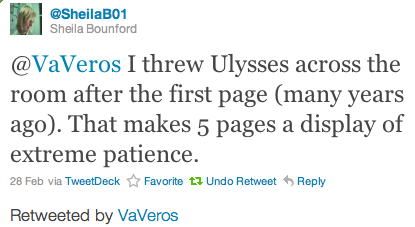
Once I gave up reading this book I tweeted the following:

Only one person objected. The other five who answered all agreed and felt that it was fine to give up and move on…and in one case, seemed to suggest that five pages were admirable.

A week later, I was struck again by the importance of a book engaging the reader in those first pages while I was listening to Brent Weeks at the NSW RA Seminar answering an audience question on how to make books appealing to reluctant readers. He spoke about how he consciously has action in the very first page of his books as he knows that this is a hook for many readers, himself included.

This led me to think of my favourite books and there isn’t a single one that I would say I struggled past the first pages. I remember reading Melina Marchetta’s Looking For Alibrandi in a single inhalation and I did the same with Jennifer Crusie’s Charlie All Night, Audrey Niffenegger’s The Time Traveller’s Wife, Matthew Rubinstein’s Solstice, Rachel Gibson’s See Jane Score, and the list goes on and on. I was not distracted after opening these books. I did not feel the need to put my book down and call a friend just to have a break and, in some reading cases, I wholly forgot to feed my children.

Another point I’d like to make is the attention given by the literary world to the first line of highly regarded books. There are books published on first lines, there are websites dedicated to them and there are infinite trivia quizzes on that all important first line. That first line is the hook and those first five pages are the bait that should draw you into the rest of the book.

I then think about the books that I have picked up, I have liked their covers, I have liked their premise based on a good blurb yet for some elusive reason, be it the writing style, unlikeable characters, too much violence or some vague intangible element, I have decided to move on to a greener reading pasture.

Giving up on a book in its opening pages does not mean that the book is not good. It may have some wonderful qualities and you may decide to revisit the book, or some other book by that author, at some later stage, as I plan to do eventually with Nalini Singh’s books. It just wasn’t the right book for you at this point of your life.

So I beseech you all to not slog through a whole book; don’t labour the first 50 pages. Let your senses take over and make a snap judgement on whether to read on in those introductory five pages.