Struggle, Long Lost Acquaintances and Immature Side-eye: Observation Notes 69-70 and Reading Note 30

Observation Note 69: Immature side-eye. Dammit! This could have been such an obvious funny post but instead I have been reading navel-gazing memoirs and angst-filled sexless books for months on end. *shakes fist* *then giggles*.

Obviously, I continue to be a teenager.

Observation Note 70: Long lost acquaintances. I had dinner at a friend’s place last night and my host (in her mid-50s) was describing the moment that a few weeks earlier she had contact with an old high school friend as something that was astounding and incredible as no-one had heard from her since school had ended early in the 1980s. The question arose, would there be anyone who I would be shocked to the point of loud exclamations if I saw her again. Without a thought I remembered the exact person (who I will not give their real name here for obvious reasons) – let me call her “Helen”. When we were all about 15 years old, “Helen” got her first boyfriend. “Helen’s” parents found out and totally freaked out, over-reacted, pulled her out of school and sent her to their village in Greece to live with her grandmother to ensure she had “good Greek girl” values instilled in her. A year later, her parents went to Greece to visit their daughter and to bring her back to Australia, just to find that she was going out, had a boyfriend, and was loving life in her Greek village. She absolutely refused to come back to her oppressive life in Australia. I have never heard from or about “Helen” since that last update. But what really stood strong in my mind was that the Greece that my migrant parents spoke about must be incredibly different to the one that “Helen” travelled to, and I was to find out from my own travels that this was an absolutely true perception of a country whose mores had changed with the times.

Reading Note 30: Struggle. (Just a heads up that there will be a spoiler in this note). In March, I read Elizabeth Acevedo’s The Poet X. It is a coming-of-age verse novel about (X)iomara’s struggle with her migrant parents, her mother’s religion and their very different responses to life. Xiomara is coming to terms with her changing body, her twin and his introversion and as per the usual YA novel, there is the necessary inspirational teacher who mentors and directs here in her time of troubles. Xiomara had complex teen problems that she was grappling with especially when it came to pushing back against parental expectations. This YA novel took me a while to get immersed into, however, once the rhythm of the writing took hold, I flew through the book. There was a small section later in the book involving Xiomara’s mother’s inability to reconcile herself to her daughter’s American lifestyle and interests, especially including Xiomara having a boyfriend. This felt over-wrought and simplistic for me especially in light of how the issues were resolved optimistically which to me felt unlikely. Over-wrought parents don’t just easily accept a new normal. I felt uncomfortable with the book’s ending. Perhaps this is due to my own personal experiences in my youth, especially in light of “Helen” not having understanding parents, whose parents became over-wrought sent her to another country rather than accept her having a boyfriend. “Helen” was not the only friend whose migrant parents had similar cultural difficulties , and who had similar reactions to X’s mother, this made it much harder to ignore my feelings and accept the author’s story. It was too close to home and all that. My own personal experiences aside, the story was powerful and strong and I loved the application of slam poetry as the narrative tool for understanding X. It was a very good read which gave me lots to consider.

A Walking Day: Reading Note 29

Reading Note 29: A Walking Day. I’ve been reading Vivian Gornick’s The Odd Woman in the City – her life and observations living in New York City. I decided to live the text (without actually flying to NYC) by going in to my favourite Sydney places and spending a good part of the day walking everywhere. I was with my husband and oldest son (our younger son was at his football game).

We met at the Archibald Fountain in Hyde Park, walked down to and through Pitt St Mall over to Angel Place. We caught the light rail a couple of stops down to the harbour where we got a bite to eat at The Rocks Market and ended up having a quick drink and listening to Irish music at The Mercantile. It was a sparkling day 💖

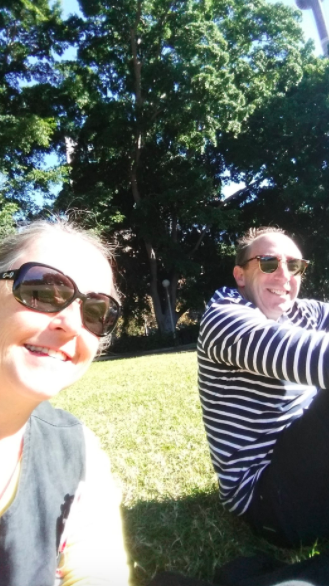
My husband in his blue and white striped long sleeved T-shirt (so French!) with me sitting on the grass in Hyde Park.
Archibald Fountain is a water fountain in Sudney. The focus is on a young Apollo with green trees as a backdrop with a bright blue sky.
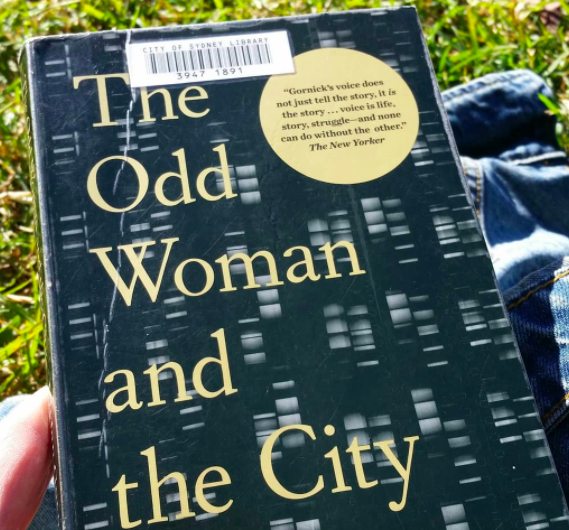
An image of the novel The Odd Woman and the City. Text only cover.
A lovely photograph of my husband and son. The backdrop is of The Rocks Market.
A bright blue sky with the tips of trees at the top of the photograph. I took this photo lying down.

Best laid plans and Nature: Observation Note 68 and Reading Note 28

Observation note 68: The best laid plans of mice and men. Today, I ended up returning three books to the library that I had borrowed twice, each time for a three month period (this is inclusive of two automatic renewals). I managed to read Vivian Gornick’s Unfinished Business (see Reading Notes 17-21), however I returned Gornick’s Fierce Attachments as well as Rebecca Solnit’s Wanderlust: A History of Walking without even starting them. I still have an overdue book – I am half way through Vivian Gornick’s The Odd Woman in the City and I am going to try to finish it tonight and return it tomorrow. Thankfully, my library system doesn’t have overdue fines and to allay any worry warts, if the book had been recalled for a reservation I would return it unfinished. However, it is overdue only because time has run out. It is just going to sit on the shelf until I feel a decent amount of time has passed and I can reborrow it. Though I am enjoying Vivian Gornick’s writing so much that I might even go out and buy a copy instead. As for Rebecca Solnit’s Wanderlust, I kept it on hold as I was trying to finish all three Gornick books before I started it. I had seen Solnit’s name pop up here and there over the years – from Twitter mentions to mansplaining stories to Goodreads listing as well as references in other books.

Reading Note 28: Nature. I have very little interest in going walking/trekking/rambling through the bush/countryside/forest/[insert here your environmental Nirvana]. I embrace my love for city walking and the urban environment. I’m of the opinion that for the environment to stay intact, we should keep far far far away from it. I don’t need to experience nature myself to value it and my endeavour to preserve it is by not setting foot int it. Treading lightly by not treading at all. That said, I do love reading about environmental adventures. Perhaps it is born out of my childhood reading of Johanna Spyri’s Heidi and L. M. Montgomery’s Anne of Green Gables. I happily read about other people’s travels through nature’s best which is what makes Kathryn Aalto’s collection of women in nature biographies so great. Kathryn Aalto includes Rebecca Solnit in her book Writing Wild: Women poets, ramblers, and mavericks who shape how we see the natural world. This is an excellent book of essays focusing on women who have written about nature over the past couple of centuries and their unique perspectives. 25 essays of about 6-8 pages focusing on each woman’s oeuvre was written in such an engaging way that I found myself going down rabbit holes to search online maps and animal and flower names, further researching each author, either finding the 19th century author’s work either on Project Gutenberg, the Poetry Foundation, or simply reserving library copies of the contemporary authors’ works (hello Rebecca Solnit!!!!). This book serves as a gateway to further explorations of the body of women scientists, novelists, conservationists, poets and more all writing about nature, the changes that have occurred over the centuries, the ecological impact of the industrial and modern ages, and the engagement with the urban and rural landscape. I just loved this book.Though I borrowed this book from the library, I will definitely be buying my own copy. It is a keeper.

Environment, eavesdropping and quiet: Observation Notes 65-67

Observation note 65: Environmental Coffee. In October of 2019, I saw a short news snippet on how Italy’s coffee culture differs from Australia in that it doesn’t create as much rubbish. This is because people sit down for their coffee rather than have take-aways. So I have made a concerted effort ever since to make time to sit down for my coffee. Since then, I have only bought three take-away coffees. If I can’t make time to sit down, I just don’t bother. I know that keep cups are an option but I can taste the plastic in them. I also like the sit down. 10-15 minutes a day forcing me to think about my next step, my next action, my next read or my next piece of writing. Of course, considering that the majority of 2020 was spent in lockdown, I really missed having cafe coffee. It does differ from home coffee even if you have invested in a $400 coffee machine to make excellent coffees at home. My lockdown, homemade coffees were wonderful, of course. I was grateful for all of them especially as they were all made for me by my husband. We got into the habit of taking our coffees onto our front verandah even if it was mostly quiet with sparse foot traffic going past. Occasionally, we’d chat with friends or neighbours, or my sister would walk past and we would have a very loud, socially distanced conversation.

Observation note 66: Eavesdropping. One of the benefits of only sitting down in a coffee shop is being able to listen in to other people’s conversations. The other day, as I was quietly sipping my coffee, pretending to be writing on my laptop, I could hear two young men having a catch up. One of them was talking about his break up with his girlfriend and he said that he was “a conscious narcissist” and that he didn’t want to spend any time pandering to a woman’s needs when he just wanted someone to take care of his needs. Suffice to say, he was a total bore, even if he did effusively appreciate the delicate blue-flowered teapot his chai was served up in. At another table, a group of women were busy planning archive acquisitions for their workplace. Only one was taking notes as the other two discussed dates and possible collaborators for projects. The day before, while I tucked into my bulgar wheat crepe with rose water poached pears, the woman next to me was discussing the merits of the picture books she was reading with the barista who was taking a break from his work. Ahead of me, a couple were working out their child’s pick up schedule. All this was done in hushed tones. No-one was particularly talking loudly (dammit!). I had to strain to listen in. It was a task to overhear their conversations over the buzz of the coffee grinder and the staff seeing to other people’s needs.

Observation note 67: What is quiet. The other day, while I sheltering from the cold at the library (see Observation Note 63), I found the “Quiet” room to read my book. There were a few other people in the room and everyone was totally quiet. However, just like the coffee shop, there was ambient noise. Primarily from staff who were answering their users questions. When I was working as a librarian, I was always keenly aware of how contradictory librarians were to their library “brand” (I really hate that word). The quiet room’s door was propped open, so the staff discussion could be heard, the children’s storytime cheers were carrying from the other end of the room, and the sitar player sitting outside of the library was clearly audible. What was lacking though, were conversations between people that I could listen in on, trying to get a glimpse into their life. The elderly gentlemen in search of the Choice magazine so he could read up on washing machine reviews was disappointingly boring. So I left. I went back to the coffee shop. I needed to overhear more stories.

Language, Photoessays και να γεμίζει το μάτι: Observation 64, Reading note 27 and my first Greek Note.

Observation Note 64: Language. I made a decision at the tail end of my thesis studies that when I had finished I would re-engage in reading in Greek again. I attained my First Lyceum certificate (first year of senior high for those in the US, Year 10 for those in Oz) and then I stupidly stopped studying Greek. Though I am fluent in Greek, my reading flow has diminished over many decades. So in my aim to become proficient again, I read a travel photoessay. The text is a reworking of the Instagram post I wrote upon finishing reading the book a while back. I am well aware that my written expression is rudimentary and on par with a primary school student but I don’t care. I am rebuilding a skill lost here!

Reading Note 27: Photoessay. Nikos Desyllas’s Epirus: an aesthetic wander through a Greek region is a beautiful bilingual photoessay travelling through the state of Epirus in the far North West of Greece where the Pindus Mountains meet the Ionian Sea. The photographs of places such as Ioannina, Zagoria, Metsovo (which I have visited 3 times) and all the in-between mountains and gorges, lakes and rivers to the sea are presented alongside quotes and stanzas from Ancient Greek tales of Odysseus to folkloric songs similar to those my mother (who is not from Epirus but from nearby on the Eastern side of the Pindus) would sing. I deeply enjoyed reading this book and I really hope I can find more of Desyllas’s books.

Greek Note 1: Γεμίζει το μάτι. Τού Νίκο Δεσύλλας το βιβλίο Ήπειρος: αισθητικη περιπλανηση στο χωρο μου άρεσε πάρα πολύ. Είναι μία φωτογραφική έκθεση για το νομό της Ήπειρος. Ειναι δίγλωσσων στα Ελληνικά και στα Αγγλικά με στοίχοι απο αρχαάα μυθιστορήματα του Οδυσσέα και διαλεγμένα δημοτικά τραγούδια που μου θυμίζουν τα τραγούδια της μαμάς μου (που δεν είναι απο την Ήπειρος όμως κατάγεται από κοντά στην Ανατολική πλευρά του Πίνδος με την Ήπειρος στην Δυση. Ελπίζω να βρω κι’άλλα βιβλία του Νίκος Δεσύλλας.

Cold, browsing and cults: Observation Notes 62-63 and Reading Note 26

Observation note 62: Brrrrr. I was not dressed for the frigid cold today. I mean, don’t get me wrong, I was clad. I had thick cotton tights, a long sleeve top, a tunic, a jacket, socks, shoes and a thick scarf. However, today called for fleece lined tights, wool-lined boots, a thick, triple layered long coat and perhaps a woollen hat with those droopy ear coverings. As I had none of these items, instead of walking around Newcastle, I spent a large part of my day eavesdropping into conversations in coffee shops, admiring the current exhibitions at the art gallery and finding the warmest and quietest corner in the library.

Observation Note 63: Browsing. As I knew that I was only going to be in the library for a few hours, I browsed the shelves looking for something short to read. This is despite carrying in my backpack my current book on the go – the storytelling is always greener on the other side. I am convinced that this is behaviour typical of avid readers. I went by the thickness of book spines and found that I rejected nearly all the books in the library as being too long to read. I couldn’t find any poetry that appealed to me, I had read all the interior design books on offer, and there weren’t any 2021 Mills & Boons on the shelf. As an aside, the library’s non-fiction section is genrefied and I found Susan Orlean’s The Library Book in True Crime which surprised me. True Crime??? I mean, Orleans is investigating a fire but I would have gone with History myself. I like the surprise of other people’s categorisations.

After a short librarianlicious while, I finally found the graphic novel section. Jackpot!

Reading Note 26: Cult. I ended up spending the morning reading Marianne Boucher’s Talking to Strangers: A memoir of my escape from a cult . This is the story of how, in 1980, while she was only 18, Boucher became a member of a religious cult in Los Angeles. Boucher’s retelling of the brainwashing she was subjected to, her mother’s measured and calm response in safely extricating her daughter from the cult, and Boucher’s continued struggle with her sense of herself, her terrifying experiences and her responses to other people was steeped with intensity. Graphic novel memoirs are one of my favourite (sub)genres and this one certainly was a gripping read.

Not all days are reading (or writing) days

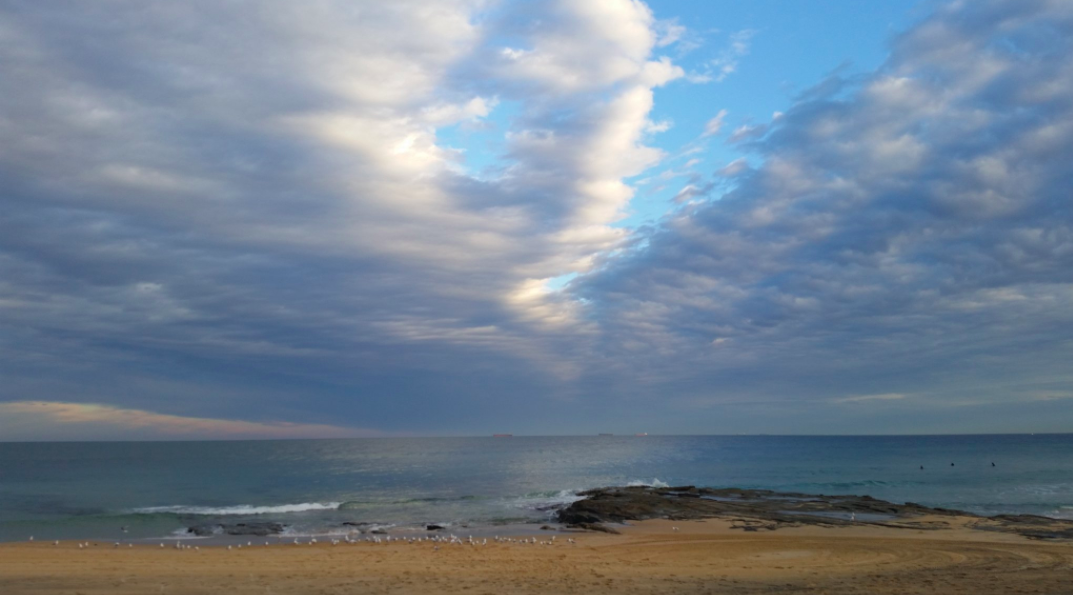
I had an unexpected road trip to the city of Newcastle today. Hubs and I left the dogs in the care of our sons and headed out early in the morning. Newcastle is an approximately 3 hour drive north of Sydney. I’m only here for two days however it is the first time I have ever been here so I spent the day walking around rather than reading. I forgot to take photographs of the city itself but I did manage to take a couple of photographs. The first is of the mouth of the Hunter River looking across to Stockton. The second is of the Pacific Ocean taken from Newcastle Beach. I have a rubbish old phone with a rubbishy camera which takes rubbishy unfocused photographs. My family tells me that the technology is not to blame. Operator error and all that.

Enjoy!

Looking out to Stockton. The horizon is uneven. Sun is glaring through dark clouds.
A landscape photograph. Blueish cloudy sky, blue steel like Zoolander ocean with a sandy shore. 3 surfers bobbing in the water.

Mail order brides: Reading Note 25

This post is one that has been sitting in my drafts for a couple of years.

Reading Note 25: Mail Order Brides. There is something striking about taking a romance fiction trope and juxtaposing it against real life narratives of the same trope (can real life be a trope???). Earlier in the year, I concurrently read Helen Hoang’s The Bride Test at the same time as I read Dr Panayota Nazou’s Promised Brides: experiences and testimonies of Greek women in Australia (1950-1975).

You would be hard pressed to find a Sydney-based tertiary-educated Greek-Australian who does not know Dr Nazou who taught Modern Greek at the University of Sydney for four decades. I also know Panayota personally as it was she who convinced me to not drop out of university back in 1989, spending the best part of Christmas Day talking to me while I cried in my bedroom. To say that I have a high regard for her is an understatement. Her Brides research has been ongoing for many years. I originally read her Greek publication, I have attended the exhibitions on the brides that were interviewed and now the English translation of her book brings another level of depth to the experiences of women who married men they did not know. Dr Nazou undertook interviews with Greek mail order brides from the 1950s – 1970s. Her interviews bring out the anxieties of poverty stricken women whose parents or relatives arranged marriages for them in a country at the opposite end of the world. Where in romance fiction, communication blocks are broken down to emerge to a happy ending, these promised brides, only one of them has a happy marriage. Of nearly thirty stories, underlying even the relatively acceptable relationships is a sense of loss of their agency. So many women who married strangers because they knew it was the only way out of poverty for their families.

Helen Hoang’s The Bride Test is an “arranged” marriage for a green card trope – a Vietnamese bride is travelling to California to meet the USian-born groom who is the son of a woman she met in Vietnam. I liked the highlighting of cultural differences between people of the same heritage but with the difference that being part of a diaspora brings. This especially struck me in the opening chapters, where the main character Mỹ chooses an American name for herself, Esme. This annoyed me throughout the book and I was so pleased at the end of the book that she rejected this prevalent custom of Anglicising one’s name. It takes a lot to push back on this expectation (hey! I know because I have been pushing back on this all my life) and she reverts to her own name. Interestingly, the American born (Vietnamese heritage) hero comfortably carries his Vietnamese name.The Bride Test has all the elements of a good romance – the tension build, the world build around the characters, issues of trust and understanding how people relate to one another as well as how they shift their expectations to make way for one another. I really enjoyed it.

Reading The Bride Test alongside Panayota Nazou’s Promised Brides meant that I couldn’t hide in the fictitious world of happy outcomes. The reality is often another terrible story of the way migrant women can be left without the security of a family tied to someone they would never have chosen through their own free will. I am left saddened by both books.

Added today: I realise that I hadn’t posted this back in early 2019 because I wanted to write at length, especially about Nazou’s book. I haven’t had the chance to return to it and I really wish I had taken more notes upon my first reading of it. Perhaps I will repost on it when I get a chance to reread it (once I get it back from whoever borrowed it from me!).

Place and Pandemic: Reading Note 24 and Observations 61

Here is another post I started writing last year in about August. I haven’t changed it too much but I have brought some of my thoughts into the present tense.

Reading note 24: A sense of place. Last year I read Nora Krug’s graphic novel memoir Belonging: A German Reckons with History and Home. Krug moved from Germany to New York, married a Jewish man and starts exploring her self and her family history especially since her family did not engage in telling stories of their parents, grandparents and other family members. Krug goes on a search to understand what it meant to be German, and to find her family’s history, their role in World War II and what it means to her now living in America. At I was reading Krug’s memoir, I also viewed Unorthodox on Netflix. The mini-series is loosely based on Deborah Feldman’s memoir by the same name. The main character Esty has grown up in a Hasidic Jewish community in New York and escapes to Berlin, Germany is order to find her own place in the world, for Esty it was a need to escape the constraints of her family history, For Nora Krug, she wanted to know the constraints she was unaware of.. I really loved how these two stories are reflections of each other and how each person’s own life explorations can work at opposites so as to reach similar goals. However, it is Krug’s work which most keenly stays in my mind.

Krug talks about the concept of Heimat – which she describes as a small defined place where you feel comfortable. Having a sense of belonging to a place. This is a theme that I often read in interviews and biographies of people who return to an ancestral home or village. It is the whole premise of the show Who do you think you are?  It is like a return to a place they didn’t even know they were missing. “Heimat” seems to be slightly different in that Krug explores these feelings by finding photographs, visiting the plot of land that once was her father’s, and in delving into the uncomfortable truths of people who live through wars and autocracies. She asks her father on whether he feels guilty about Germany’s past and his answer really struck me. He says “No. I just felt terrified at the thought of what people are capable of doing to one another.” This is how I have been feeling for nearly five years. This sense of despair at the complicity, if not their endorsement, of authorities who enable so many individuals to feel comfortable in committing violences (physical, mental and symbolic). My worry is that somehow no one will ever hold them accountable to their actions. It all seems never-ending. Nora Krug learns some truths about her father that are uncomfortable yet not insurmountable and she finds her own way of making sense of his actions and their impact to others and their impact on her. Eventually, Krug ask a question that often turns over in my mind. The sliding doors question “who would we be as a family if the war had never happened”. Who would I be if my parents hadn’t been orphaned and impoverished by the consecutive wars in Greece during the 1940s. But even further back, who would I be if my grandmother had not been orphaned in 1918.

Observation 64: Pandemic. Just over 100 years, my grandmother, who was 17 years old at the time, lost her mother to the Spanish flu. Unfortunately, her father had died of appendicitis only a few months earlier, leaving her orphaned and with the care of her two younger sisters, a 4 year old and a 1 year old. My grandmother’s paternal uncle begrudgingly took in all three girls. The 4 year old he adopted out to a Romanian family living in Trikala, but no one would take the baby. He set my grandmother to work in his pig sty, where she cared for the pigs and for her baby sister. Meanwhile, my grandmother’s older sister was on a ship to the USA having left her family before either of her parents had died, and she expected them to follow her with her sisters in the months to come. My poor great-aunt. None of her family ever arrived. It wasn’t until three years later, possibly in 1921, that she heard that her parents had died. Though she instinctively knew something had gone wrong for her parents and sisters to not have arrived, she was devastated. My grandmother didn’t see her sister again until 1970. The pandemic was disastrous for my grandmother and all of her 3 sisters. They were impoverished and abandoned, growing up far from each other and in difficult circumstances.

My father too, had his life impacted by a pandemic. His parents would tell him that on the day he was born in 1928, he brought the curse with him. On that day, my grandparents lost all 500 sheep and goats to a plague. Overnight they went from comfortable farmers to being poverty stricken, being left with one goat, a newborn and their 3 older children.

It took two generations for my family to recover from these plagues and pandemics. Where Nora Krug asks “who would we be as a family if the war had never happened”, I also ask this question. Where would I be and had my grandmother not been orphaned? Had my grandparents not lost all their livelihood? Would I still be living in Greece? Would my grandmother have joined her sister in the United States? Would my father have remained on his remote mountain and continued farming sheep and goats? I certainly hope not.

I deeply feel for my parents who were so impacted by poverty and war that they could no longer stay in their homes but I am uncomfortably grateful that my parents had to migrate to Australia. It is a deeply faulted country but thankfully our pandemic response has, at this point anyway, kept the national death rate low by locking down, closing the borders, increasing contact tracing and requiring people who do arrive from overseas to quarantine for two weeks. But keeping the national borders shut to stave off the pandemic is not sustainable in the long term. I went and had my vaccination shot over two weeks ago as I truly feel that it is the only way forward. I want to be around for my (already adult) sons. I am so deeply saddened by those who have lost family and friends, and those who are only now starting to emerge from over a year long isolation in order to keep themselves safe. The grief and unsureness of emerging from their cocoons. My own family came out of lockdown by the end of last year – all of us quite changed. And  I cannot help but wonder how this is going to affect my sons and whether in the future they too will ask “who would we be as a family if this pandemic had never happened”.

Rage and role models: Observation Note 60 and Reading Notes 22-23

Observation Note 60: Here’s one I prepared earlier. Over the years I have started many a blog post just to leave it in my drafts unpublished. Study, family, work – a number of responsibilities have always kept me from completing posts. Since I decided to blog every day in June I thought it would be a good opportunity to post some of those drafts as well as books that I have read over the years. I know that it will make for a bit of disjointed reading. I was hoping for my observations and notes to link in and refer to each other but it might take me a while to get into writing posts with interlinking ideas. Meanwhile, over the next month I will list some books that I have enjoyed over the past few years that I have not managed to post about. The scant few people who follow ShallowReader on Instagram or GoodReads may have already seen me discuss some of the ones I will highlight. Here are two for today which are kind of in the same genre as Vivian Gornick and Elizabeth Cady Stanton from my previous notes and observations this week.

Reading Note 22: How deep is your rage. I read Mary Beard’s Women and Power: A Manifesto over a month ago. Mary Beard traces the origins of Western history’s misogyny from Homer’s Odyssey through the millennia to the contemporary era, showing how women have been excluded from civic life with “public speech being defined as inherently male”. The book is made up of two essays, both adaptations of keynote speeches Beard made in the 2010s. Beard is a classist and a historian and her writing style is engaging and clear. She argues that women should not try to be more like men but instead, we should be challenging societal structures so that we can place a higher value on female traits. In showing many examples of women being silence, Beard in her second essay, goes full circle and starts examining the ways that women were found to have their voices heard.

I became especially engrossed in Fulvia, the first living woman to have her image on Roman coins, who repeatedly stabbed the dead Cicero’s tongue for having silenced her in the past. I had never heard of Fulvia before, but I felt like I understood the sheer, burning anger that she must have had, especially in light of the belligerent dismissal and the continued perpetuation of silencing Australian women’s voices protesting the rape culture in our parliament. If you are unaware of the reason for all the women’s marches around Australia, a quick internet search should bring up our heinous government’s attitude towards women. Even this week, the continued dismissal of Brittany Hughes who was raped within the Australian parliament continues to make me rage rage rage (but not so much that I would stab at a dead tongue).

Reading Note 23: Model reader. I read Chimamanda Ngozi Adiche’s We Should All Be Feminists which is the speech she made for her TED talk in which she discusses the importance of feminism and the institutional marginalisation of women and, frankly how to understand these issues and work toward making changes. The thing that especially stood out for me in my reading of this short essay is that, just like Ayaan Hirsi Ali in Infidel, and Alice Munro, and I am sure many other writers, Ngozi Adiche read a lot of Mills & Boon novels. I feel that this is good company to keep.