Darling Be Home Soon

I love The Lovin’ Spoonful/John Sebastian’s Darling Be Home Soon. It has been covered by many artists from Bobby Darin, Allison Crowe, Joe Cocker and Slade. The simple lyrics to this song still bring tears to my eyes. They speak of needing those moments where you talk and talk and talk with the person you adore. A hand holding song.

Darling Be Home Soon

Lyrics by John Sebastian

Come
And talk of all the things we did today
Here
And laugh about our funny little ways
While we have a few minutes to breathe
Then I know that it’s time you must leave

But darling be home soon
I couldn’t bear to wait an extra minute if you dawdled
My darling be home soon
It’s not just these few hours but I’ve been waiting since I toddled
For the great relief of having you to talk to

And now
A quarter of my life is almost past
I think I’ve come to see myself at last
And I see that the time spent confused
Was the time that I spent without you
And I feel myself in bloom

So darling be home soon
I couldn’t bear to wait an extra minute if you dawdled
My darling be home soon
It’s not just these few hours but I’ve been waiting since I toddled
For the great relief of having you to talk to

Darling be home soon
I couldn’t bear to wait an extra minute if you dawdled
My darling be home soon
It’s not just these few hours but I’ve been waiting since I toddled
For the great relief of having you to talk to

Go
And beat your crazy head against the sky
Try
And see beyond the houses and your eyes
It’s ok to shoot the moon

So darling
My darling be home soon
I couldn’t bear to wait an extra minute if you dawdled
My darling be home soon
It’s not just these few hours but I’ve been waiting since I toddled
For the great relief of having you to talk to

Nanna Naps and the books that bring them on

The Urban Dictionary defines Nanna Naps as:

I would go further and add the stipulation that a Nanna Nap is never taken on a bed. It is never planned. One has a Nanna Nap by mistake. One has a Nanna Nap while waiting for the washing machine to finish its rinse cycle. One has a Nanna Nap while Ridge and Brooke fight over Brooke kissing another of Ridge’s male relatives or while Bo and Hope try to come to terms with their years spent apart due to being brainwashed into thinking they were royalty. One has a Nanna Nap while one’s boiling hot tea is cooling only to wake up to a cold Lapsang Souchong. Or, quite importantly, Nanna Naps are taken when the book you are reading, rather than amaze you and enthrall you, has sent you into Morpheus’s arms due to its somnabalistic prose. I am a regular partaker of Nanna Naps. Most often on my couch though occassionally in a chair (and dang it my neck is a mess after those). And sometimes I have them while I am in the car. This is fine when I am a passenger but not so good if I am the driver * WARNING: Nanna Naps can kill

Books I have Nanna Napped with:

Juliet, Naked by Nick Hornby

I have such love for Nick Hornby. A romance writer under the guise of lad lit and music lit. Every book has an angsty bloke and every bloke gets the girl in the end. And Juliet, Naked is no different. I usually stop reading a book that will send me to sleep but this one had an epistolary element to it and I felt I needed to persevere. I’m glad I did as it guaranteed me a Nanna Nap per sitting and I was much more refreshed when I awakened.

Don’t Look Down by Jennifer Crusie and Bob Mayer

Don’t get me wrong here, for I adore Jennifer Crusie as a writer. She is in my top 2 authors ever. I lubs her muchly. And also in my top 2 books ever is Jennifer Crusie and Bob Mayer’s book Agnes and the Hitman. Yet, Don’t Look Down took me 3 years and a number of false starts before I managed to push past a Nanna Nap on page 7. Yes, every attempt had me nod, nod, nodding off. In the end, the book was a decent adventure/romance read.

Heart of Darkness by Joseph Conrad

Reading this book became such a sure thing for having a Nanna Nap that it almost defied the rule of a Nanna Nap being unplanned. Tired but can’t get to sleep…perhaps Conrad’s description the ships lying in wait for the Thames wash is the answer, as time and time again this had me breathing little “ks” of sleep. Once again, I persevered and love this densely descriptive book.

Odysseus by Ken Catran (audiobook)

I love Greek Mythology and I particularly love hearing the stories told rather than reading them as they represent thousands of years of oral storytelling traditions. All I remember of this audiobook is driving onto the expressway heading out of Sydney for Nelson Bay and then waking up outside of our hotel 2 hours later with both my sons telling me about the gory killing and maiming they heard in the story. Two things stand out in my mind. The first is that I loved their excitement for the story and the second is how grateful I felt that I was not the driver. Since that day, unless it is a comedian, I never listen to audiobooks when I am the driver.

Vineland by Thomas Pynchon

This was one of the 9 books that I removed from my home in my annual purge of books I will never read. I recall opening the book. I think Chapter 1 starts with a domestic scene and then…..zzz (a Nanna Nap beckons me even as I type about this book).

June was a quiet month….

Well, it wasn’t really quiet at all. It was only quiet here on Shallowreader (apart from our sad Digger Dog post) as I was off blogging at Read It 2011 as part of #blogeverydayofJune (or more popularly known as #blogjune). Thankfully, the blogging was shared between 6 of us. It was challenging to make sure that a post went out everyday. A google doc schedule kept us all to task though there were some last minute fill in and swaps. All in all, it was fun and it has left me with a long list of blog ideas for Shallowreader.

On top of all this, I was also asked to write a guest blog for the lovely writers over at Down Under Divas.

On Bookshelfporn

Here is a list of my blog posts for Read It 2011:

The Book That Launched a Thousand Trips

From Elizabeth Enright to Adam Gopnik: Living a New City Reading Life 

Travelling Through the Sense of Home

Vale Patrick Leigh Fermor

Have eReader – Will Travel

Eighty Years of Tintin and Still Travelling

Armchair Romance Makes the World Go Round

Enjoy!

Our Digging-est Dog

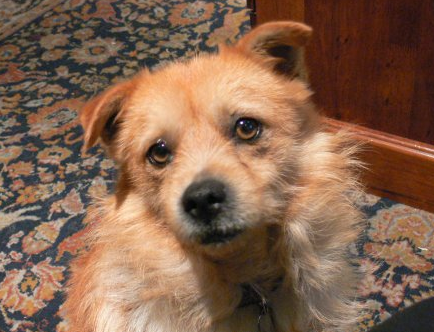
When my husband was a young child, his favourite book was The Digging-est Dog by Al Perkins, illustrated by Eric Gurney. As soon as our first child was born, he went out and bought a brand new copy of this book and we both read it to both our sons who, in turn, also loved The Digging-est Dog. So when we decided four years ago to get a dog we were fortuitous enough to find the perfect little dog from the Sydney Cat and Dog Home. Part cairn terrier and other parts unknown, this 3 year old little dog, despite being micro-chipped and registered, had been found on the streets and went by the name Tigger. Now, we weren’t all that thrilled by the Winnie-the-Poohesque name but we were well aware that he already recognised his own name so we changed it, only slightly, to Digger. The name conjured up all the best elements of both the childhood classic and the quintessentially Australian term. The name almost begged for a quick wink while saying it.

In the book, Sam could not dig (how could he learn on the hard concrete floor of the pet shop). True to form, if not name, Digger could not dig. He begged, shook hands, rolled over and could even do backflips (though he never really mastered fetching). But we thought that the digging gene had passed this dog by. This was not something we were overly concerned about. Non-digging in dogs can be a good thing, and Digger didn’t seem to be ostracized by the neighbourhood dogs for this inability (unlike poor Sam who got laughed at by even the smallest, mangiest mutt). Then one day we came out to find a hole in the garden, with Digger standing proudly beside his handiwork.

Digger explored digging in a haphazard fashion. Some months would go by without so much as a scratching, followed by something not unlike an escape attempt from Stalag 13. His digging abilities allowed him to escape from a temporary enclosure in the large backyard of my mother’s house while our backyard was being turned into a building site. Each time huzbah would walk triumphantly back to the house having added another inescapable addition to the fence he was beaten back by Digger, tail wagging with a look that said “that was fun, try another one!” It turned out Digger was digging out even large tent pegs to facilitate his escapes.

Digger’s also loved being with us at all times. When we first brought him home he had that rescue dog anxiety that tears at your heart. An anxiety that you will leave him behind, an anxiety upon seeing cats and an almost desperate need to please his owners. I have no idea how someone who could lovingly own a dog for 3 years, train him so well and then so either callously or carelessly dump him and leave him to his own devices on the street.

The first day we had Digger we took him for a walk to the local shops and while there a car came to a stop and the driver almost ran out crying “Tigger!” We were horrified that this dog, with whom we had already bonded, had been ‘found’ by his erstwhile owners. However it was one of the many wonderful volunteers at the Sydney Cat and Dog Rescue Home, all of whom, it appeared, had fallen in love with this most lovable of animals.

A houdini-like dog presents challenges for dog owners, especially when we temporarily were staying at my mum’s. Left to his own devices in the back yard, he dug out mum’s vegetable garden and left little surprises where they would remain unnoticed by all but the most eagle-eyed of grandparents or innocent fingered of toddlers. Tying up a dog is cruel. Luckily, my sister in law who lives in the country came to the rescue and offered to take care of him. Digger who had visited the farm with us many times, loved the farm, with its expansive running and digging opportunities, and with acres of land on which to defecate freely (although curiously, he seemed to confine this to the immediate vicinity of the main house).

Fencing designed to keep much larger animals in proves ineffective at farms for domestic animals, but Digger, like most dogs, didn’t stray far from the house. However, yesterday, Digger strayed from character and in a tragic chain of events, ran under my sister-in-law’s car as she left the farm. He gave out a sharp yelp and died almost instantly. We received a call moments later from my distraught sister-in-law. While we made the sad journey to the farm, her family put together the most touching tribute to a dog ever seen. Her 5-year-old son collected flowers, her husband etched a small headstone, and other younger children staying on the farm, witnesses to the event, helped pay their respects collecting berries and even making a wreath. My own sons, stoically helped dig Digger’s grave down on the point near the river.

Digger looked peaceful and happy as he was laid to rest in the last moments of daylight yesterday, with all of us there to pay our respects and to say good bye to our own most digging-est dog.

I’m dreaming of bookshelves

When I was 6, I went to the State Library of NSW for a school visit, returned home and told my father that when I grew up I was going to work and sleep there amongst the stack rows. Ten years later, I would study at the awe-inspiring Mitchell Library, back in the day when anyone could climb the stairs and access the books. My favourite, dream-like study spot was in front of the 938’s, from memory, it was up one flight of stairs on the right hand side.

Mitchell Library, Sydney (#24) / Christopher Chan

Now, I am a librarian but I have yet to sleep in a library let alone the State Library (though, funnily enough, I have managed to lock a borrower in the library overnight but that is another story). My own home is full of books and there isn’t a single room that doesn’t have bookshelves – including the bathroom and laundry. Which has brought me to dream of 1 bookshelf. 1 floor-to-ceiling bookshelf, 1 floor-to-ceiling, need-a-ladder-to-reach-the-top, kickass bookshelf.


Ten authors and their tenth book

My bookgroup celebrated its 10th anniversary this week. The topic for this month was 10. So I decided to look at my favourite ten fiction authors and their first and tenth fiction books. Five of the authors were amongst my favourite authors in 2001 and the other 5 are amongst my favourites in 2011. My aim was to see if each author improved with every book, whether they were they consistently good and whether or not they managed to sustain my interest. I am listing the authors in alphabetical order not in order of preference.

Isabelle Allende

1st title: The House of Spirits (loved it)  10th title: City of Beasts (I have not read this title)

I remember falling in love with the intricate lives that Allende wrote about. Her books were like a perfume that I could sense when I would sit and read but by the time Paula (let alone City of Beasts) was released I was no longer interested in reading more of Allende’s books.

Suzanne Brockmann

1st title: Future Perfect 10th title: The Kissing Game (I haven’t read either of these titles)

The first Brockmann book I recall reading was Prince Joe (her 8th book) and she quickly became an autobuy author. I discovered her Tall, Dark & Dangerous series (Silhouette) and then became completely taken by her Troubleshooters series which are full of action, shooting, nefarious terrorist plots and lurve. It’s like watching/reading Team America sans the crass humour. However, as much as I enjoy her books I have not felt compelled to buy any books since Into the Fire and I am now happy to wait to borrow a library copy.

Douglas Coupland

1st title: Generation X (loved it) 10th title: Eleanor Rigby (I have not read this title)

I read Generation X within months of its release and it was like a revelation. It was modern, it was disinterested, it was wry and I was in love with Coupland. Life After God, for years, was a favourite book yet my interest waned rapidly after reading Polaroids from the Dead (non-fiction) and I have not been tempted to read Eleanor Rigby.

Jennifer Crusie

1st title: Manhunting (I have not read this book) 10th title: Crazy for You (A great read)

I enjoyed this book, stalker, Quinn, Nick and all. The first Crusie title I read was Charlie All Night which I reread every few years (and still enjoy). Crusie’s sharp, biting dialogue is fun and her characters’ relationships and friendships make me want to be friends with them. My personal favourites are Welcome to Temptation (11th title), Bet Me (14th title) and Agnes and the Hitman – co-written with Bob Mayer (15th title). I feel that these 3 titles set the contemporary romance literature benchmark.

Gabriel Garcia Marquez

1st title: In Evil Hour (I have not read this book) 10th title: there is no 10th novel (I could cheat and count his novellas but I won’t)

I have a shameful secret. I know that in the early 90’s I read (and re-read) both 100 Years of Solitude and Love in the Time of Cholera. I recall waxing lyrical about them to a guy I was interested in and I saw it as a “sign” that he then read them and we went out and, over dinner, spent a night discussing them both. Both my copies are dog-eared and marked. Now here is the shameful part. I cannot for the life of me recall anything whatsoever about the books (except that I loved them at the time). I could have chosen a different fave author to include, one whose works I did remember. But I chose to include Marquez because I don’t think his books resonated with me the way I initially thought they had.

Rachel Gibson

1st title: Simply Irresistible (enjoyed it) 10th title: I’m in No Mood for Love (loved it)

I read I’m in No Mood for Love before Simply Irresistible. Having read, and loved, several of Gibson’s titles I tracked down her backlist and read through them all. I thoroughly enjoyed them. I’m in No Mood for Love also stands out for me because it was a rare romance that I recommended for my husband to read and he too enjoyed it. Simply Irresistible was good and fun but I didn’t recommend it to my husband….(which is telling in itself).

John Irving

1st title: Setting Free the Bears 10th title: The Fourth Hand (I have not read either of these books)

I remember watching the movie of The World According to Garp and my sister and I pooling our money together to buy the book. And we both loved it. We continued to read as many of Irving’s books as we could find. And I particularly recall thinking that A Prayer for Owen Meany was a powerful tale. However, by the time A Son of the Circus was released, once again, my interest had waned.

Milan Kundera

1st novel: The Joke (a great read) 10th title: there is no 10th novel (though there are a number of short stories)

This is another author adoration that I had due to needing to read the book of a movie that I loved. And as wonderful as The Unbearable Lightness of Being was on film, the book far surpasses it. Yet, it is The Farewell Party remains my favourite of all Kundera’s books.

Susan Elizabeth Phillips

1st title: The Copeland Bride (I have not read this book) 10th title: Nobody’s Baby But Mine (An enjoyable read)

I love that Susan Elizabeth Phillips (SEP) creates unlikeable characters whose actions are awful and yet by the end of the book you want them to have a happy outcome. This is particularly true in Nobody’s Baby but Mine in which the heroine tricks the (sports) hero into impregnating her for she decides that she wants to have a child that is not bright. Her stereotypes and deception grate yet I love the complex relationships SEP builds and reconciles. I feel that she is another benchmark romance author. I look at her list of published titles and though her earlier books were good, her Chicago Bears series are outstanding and it is her 17th title, Match Me If You Can, that is my favourite of all her books.

Julia Quinn

1st title: Splendid (I have not read this book) 10th title: An Offer from a Gentleman (A lovely, sad Cinderella story)

Up until a year ago, I had no interest in reading historical romances. I didn’t mind historical fiction or fiction that was contemporary when it was published but now is historical (ie, Jane Austen) but, I’ll admit, books where women swooned over dukes, earls, or barons left me cold. I decided to overcome my biases and started with a very early Julia Quinn novel that did not grab me at all. I then read When He Was Wicked and fell in love. By the time I read An Offer from a Gentleman I was hooked and just as I was tiring of the 8 book Bridgerton series, the last book On the Way to the Wedding had me on the edge of my seat anticipating how the relationship issues were going to be resolved. And this book was 5 after her 10th title! Simply gold!

The thing that stands out more than anything else is that my reading tastes have changed markedly over the last 20 years. 20 years ago I was reading predominately literary fiction or non-fiction smattered with some category romances and the occasional romance. I devoured classic literature and loved to read conceptual modern fiction too. By the late 1990’s I felt exhausted by the constant search for the meaning of life and (for the most part) stopped reading literary fiction. Time has yet to test whether I’ll feel the same way about my current favourites (though to be fair Jennifer Crusie and Suzanne Brockmann have been faves for over a decade already). But what I do find interesting is that most literary authors’ strongest novels are at the beginning of their writing life whereas it seems that the inverse is true for the romance authors I have listed above. Where I may have enjoyed their first few books, it is their subsequent publications that have drawn me in and hooked me as an avid fangirl.

Obviously, I am biased. I love reading romance novels so it is impossible for me to be objective. However, I was a fan of literary fiction for a lot longer and much earlier in my youth. And why do I think my reading preferences changed? I think I might leave that question for another blog post.
So whether you call it your mancave, manroom, manshed or manspace this book is for you

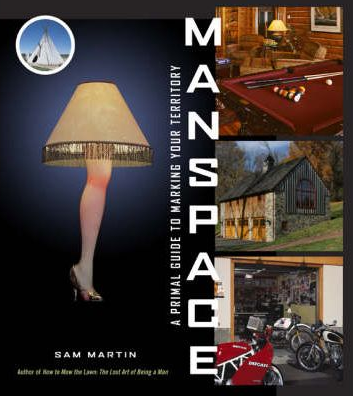
Manspace: A primal guide to marking your territory

by Sam Martin

a shallow review

Home decorating books, for the most part, are glitzy, glamorous and though beautiful, they are highly impractical. As much as I would like Michael S Smith or India Hicks to help me fine tune my home, the reality is that most of the books in this genre are either low end DIY guides or high-end “hey look! you too can have a 747 hangar just like John Travolta“.

However, Manspace is one of those books that falls well within the realm of practical, visually pleasing and humanly possible examples of interior decorating. Showcasing rooms of all styles with predominately male interests, from the classic car collector to the tech geek to the international hunter. With chefs kitchens, theatres, model railways, baseball collections, cards, wine distillers, houseboats, caravans and rock-climbing walls every manspace in this book reflects their owner but also gives the reader the scope to imagine creating their own space.

I live in a testosterone driven house. 3 males and a (used to be) male dog. I was never a girly girl but once I had sons I felt the need to buy chintz.  Now, apart from a set of flowery tea cups and my many romances strewn around the house, my home has masculine undertones. Ships, maps, and trains are present in most rooms and, of course, there is the garage for the spare TV, nerf gun wars and bikes. My men love their “manspaces” and this book has helped inspired them. So whether you call it your mancave, manroom, manshed or manspace this book is all about encouraging men to reclaim their homes and leave their decorating mark.

VaVeros’s Favourite Australian Picture Book Picks

With Aussie Author month coming to a close I wanted to highlight some fabulous Australian authors and illustrators in the realm of children’s picture books. These are my surefire picks.

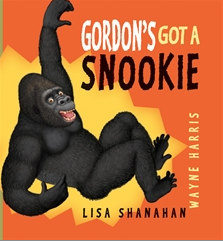
Gordon’s Got a Snookie by Lisa Shanahan and Wayne Harris

Gordon’s a silverback brought in to service the ladies. The ladies expect an alpha gorilla but they get a beta instead. This book is fabulous. It’s about teasing, loneliness, comfort and lurrve! I have bought many copies of this book – many for family overseas.

.
Flame Stands Waiting by Corinne Fenton, illus by Sebastian Ciaffaglione

You know those picture books you pick up and start reading and you suddenly feel that you are standing in the illustration as it is incredibly life-like and mesmerising. Well, this book is it. The story of the only horse on the Merry-Go-Round that does not move, the fun park lights come to life and the emotions of the kids seem quite tangible. A gem of a book.

.

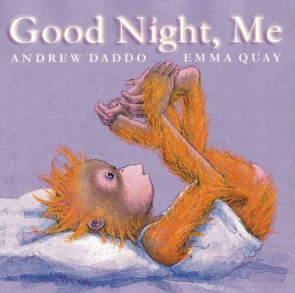
Goodnight Me – Andrew Daddo, illus. Emma Quay

Goodnight Me is a sweet, lovely bedtime book for young children. It’s the kind of book that has your 3 year old curling up to sleep with their board book copy.

.

Lilli-Pilli – The Frog Princess by Vashti Farrer & Owen Swan

A historical picture book romance with kings, queens, dukes and the search for the perfect match. Poor Lily though has frogs legs. The illustrations are dream like and in keeping with fairytales.

.

Leaf – Stephen Michael King

Quiet, introspective with a childlike, whimsical perspective of the world. Everytime I read a book by Stephen Michael King I want to climb a tree and watch birds flying around for the whole afternoon. He gets to you that way.

.

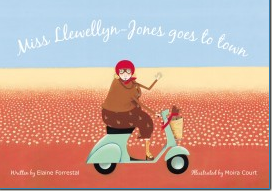
Miss Llewellyn-Jones Goes to Town by Elaine Forrestal, illustrated by Moira Court – I love the cadences and rhythms in this gorgeously illustrated book. I wish I could get a series of prints for my kitchen from this book too. Love it.

.

.

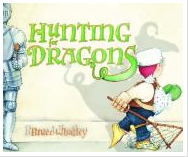
Hunting for Dragons by Bruce Whatley

You know how as a child you walk around the house searching for that monster and it is always lurking close by appearing in everyday movements and items. Well, Bruce Whatley has this imagining down pat. I love pouring over all his books but this one, with its dragon hunter, is a standout choice.

Romance fiction, to me, is somewhat akin to science fiction

I love reading romances. I love the relationships, I love the internal monologues, I love reading both the male and female points of view of the same events. I love reading about characters grappling with either internal issues or external events beyond their control and overcoming these problems together. I absolutely adore the Happily Ever After endings to such a point that I will kill fairies to ensure that I get the ending that I most desire. And most of all, I love that I have to leave my cynical, snarky self at the door for the duration of reading and escape to some other world, some other planet where the relationship build ensures that no matter what obstacles, issues, evil nemesis, glamorous next-door neighbours, indecisions, friendship pressures and other alien, droid or spaceship interventions, the hero and the heroine prevail and end up with one another. Yes, dear reader, romance fiction, to me, is somewhat akin to science fiction.

I grew up on a street that had 2 parish churches (different denominations) and every Saturday and Sunday we would sit on our front verandah and watch hourly processions of brides and grooms in their various Jaguars, Mercedez Benzs, convertibles, Holden Monaros, horse-drawn carts, and ribbon strewn silver Bugattis passing our home. Each and every time my parents would jokingly say “Another couple going to their hanging”. This was the first plant in my mind that marriage was a cynical pursuit. It was a prison that was not to be coveted.

A much loved (divorced) aunt, at weddings, would always greet me with “May you remain on the shelf, and may it be made of steel”. Hmmm!

Add to the mix that I was a Mad Magazine aficianado. Mad gave me an understanding of satire and irony and taught me to question everything. And I loved Dave Berg’s The Lighter Side of…. which always poked fun at relationships.

So any time I would hear any gushings of “But I lurve him” from the girls at school or “He’s such a good pasher” or “Oh My God! He bought me a fur coat” (I mean, really? Aside from the obvious animal cruelty issues, It’s frickin’ Sydney! It doesn’t get cold. That’s not love. That is stupidity). I would roll my eyes and think “get some perspective”.

Don’t get me wrong here – I absolutely adore my husband (and for the record – I walked down the road to my wedding ceremony – no cars) and, despite my jaded outlook, I truly believe that for most people, there is a love match. Some will be lucky enough to find it at a young age and have it last for many years (such as my friend’s grandparents who were married for 82 years), some will find it for a short intense period (Britney Spears and Jason Alexander married for a day comes to mind) but most people will be somewhere in between. And when it comes to my reading choices, I am curious, I am interested in reading about that journey of coming together. I predominately read romance fiction but I will happily read biographies with romantic elements because I love to examine and understand the circumstances around a romantic pairing as most of these pairings will be undertaken with an optimism that I find life affirming.

I have to say that I deeply dislike love stories, particularly tragic, grief stricken tales where no-one is happy and the moral is that misery gives you a deeper understanding of humanity. It may win authors literary awards but it certainly doesn’t compel me to buy any of their books. I know that life has tragedy and that death is not an option but I choose to focus on more positive aspects in life. It makes the reality of life so much more bearable.

So why would I equate romance to science fiction and not to fantasy. Well, for me, fantasy fiction is not possible. It is entering a realm that is only imagined, flights of fancy that will never be realised no matter how vivid or thrilling the story may be. But science fiction is grounded in scientific possibilities. It may not be possible in the immediate future, but just like the man on the moon, it has such wonderful outcomes should the fiction be realised. And don’t we all know how wonderful romance can be when it comes to fruition.

Reading avenues for the Shell-Shocked, Time-Strapped Reader: From First-time Parents to Corporate Workers

For many people, reading fiction means escaping into another world, losing yourself in the setting, becoming one of the characters in the book and feeling that you are there too. To do this, as a reader, you need uninterrupted time, seamless moments to relish the language, space and activity taking place but, unfortunately, when your workplace commands much of your waking time or a newborn enters your household, uninterrupted time may be only half an hour whether it is your commute or your rest time between chores and baby napping. And half an hour for most readers is not sufficient to immerse and lose yourself in a novel.

For those of you who need to see the written word at least once a day, who need that tactile sense of paper and no electronic devices and for those of you who miss reading but can’t seem to delve into characters lives like you did in those pre-work committment, pre-baby  times, here are a few reading alternatives that I have suggested to library borrowers who come enquiring. You may want to consider:

Short Stories:

Succicint, minimalist with an economy of words, the short story is a great place to start rediscovering reading. Short stories range from 2000 to 20 000 words making it a great entry point for many time strapped readers. Anthologies tend to have a thematic vein with a variety of authors. Some great examples are Girls Night Out, Zombies vs Unicorns, Steampunk. The other short story style is the one author with a variety of their own stories: Margo Lanagan’s Black Juice, Steven King’s Four Past Midnight, Tobsha Learner’s Yearn. Some of these stories stand alone and others are interlinked. Short stories are a great way to explore new genres, new author voices or just delve into a previously loved writing theme.

Literary Magazines:

There are many literary magazines all of which have short fiction, essays, poetry and the like. There is the New Yorker, Granta Magazine (thematic based approaches to compiling reading materials), McSweeney’s amongst others.

Observers:

Essayists, comedians, people who write about the funny, peculiar occurrences that they observe are often great reads for the busy person. Often a collection of their works can be dipped in and out of over a period of time. Some of my favourite observer/essayists are David Sedaris, Laurie Notaro, Adam Gopnik, Gervase Phinn.

Non-Fiction:

Non-fiction is a fabulous antidote to the reader who misses reading but not necessarily fiction. Dipping in and out of most non-fiction is a simpler task than with novels as they are fact driven. Wit the exception of biographies, most non-fiction doesn’t require the reader to emotionally attach themselves to character lives (though, that said, sometimes it is harder to let go of the real life people you read about in some history books). DK Books have great information design that facilitates dipping in and out of books, some arm chair travelling, dreaming of artists, reading about the military, atlases of history, unattainable homes in architecture books or science trivia books can be very rewarding reads.

Children’s Fiction:

In general, children’s novels are much shorter than adult novels and there is a plethora of enjoyable reading. From Dick King Smith’s The Waterhorse, Paul Stewart & Chris Riddell’s Far Flung Adventure Series to the darker Sisters Grimm series many of these stories often surprise adults with their themes and quality writing.

Mythology:

With the prospect of reading tales from around the world, reading mythology is a rediscovery of tales told either at the dinner table or in the classroom. From Aboriginal dreamtime, Homer’s Odyssey or Arthurian tales mythologies may be shorter reads but they have inspired many generations with their epic adventures.

Poetry and Lyrics:

Poetry and lyrics are the delivery of ideas in rhythm and cadence that stays in your mind long after you have re-shelved the book you read it in.

To add to all these, there are newspapers, comics, graphic novels and many other shorter writing options that can be suggested to readers. Websites, blogposts, zines and a number of online options are also available but for the purposes of this post I wanted to focus purely on the print reading options that are available.

For the busy worker, the lack of reading opportunities can sometimes go un-noted  for many years as it occurred incrementally but for the first-time parent this transition isn’t a slow one but one which seems like a severance of a body part. And though some of the above suggestions may seem overly obvious, when someone is overtired it is easy to overlook simple ideas until someone mentions them to you.

So whether you are a time-strapped executive who is working 12 hour days, a cleaner who physically is exhausted at the end of a long shift or a new-time parent struggling to find any time to themselves, hopefully the above avenues are helpful and bring lots of reading pleasure.