10 Movies that have stayed with me through the years

A while ago I was tagged to Name 10 Movies that have stayed with you through the years. It has taken me a while but I have finally done it. What stands out for me is that four of the movies that I have listed originated as a print fiction yet there are none that have gone the other way around.

1. Grease – The teen flick that beats all teen flicks. It is the ultimate. Cool kids, geeks, singing, car chases. It has it all. I know that it is all PC to criticise the movie for not being PC and for Sandy caving in to peer pressure but I view the movie differently. Grease is classic romance. Sandy and Danny like each other but they are both caught up on their image. At the end of the movie, it is not only Sandy that gives up her “good girl” image but Danny gives up his “bad boy” image. He letters in track for Sandy. He gives up his leather jacket for the letter jacket. He runs for her! HE RUNS!!! Yet all critics can do is focus on Sandy changing for him. Well, maybe Sandy changed for herself. Maybe she didn’t like living life to society’s expectations of what constitutes “good”. Does she inherently change because she dons the sparkly lycra? A wop-ba-ma-loo-bop-a-wop-bam-NO! She is still cute and giggly as she was at the begininning of the movie. And as for Rizzo. AWESOME! She’s already done and ditched the hero before the movie started. This movie stands out for me because it ultimately says, dress up the way you want, because it makes no difference as to who you are. People will laugh and say mean things regardless. Just do what you want.

Continue reading

Swoooooooning and entangling

So I’m back on ABC702 Linda Mottram‘s show tomorrow. It looks like this will be a semi-regular gig (once or twice a month). For the most part, I will be using the ReadWatchPlay monthly themes for the reading I will review on her show. Which is fab fab fab for tomorrow because February is SmoochRead!

YUP!

We are talking love!

We are talking Swoon!

We are talking Mills & Boon! (wellll….not really. Not this time. It did rhyme though)

Colour Me Swoon: The heartthrob activity book for good colour-inners, as well as beginners

by Mel Elliott

Colour Me Swoon

Colour Me Swoon

How does one go past a colouring book of hearthrobs. Continue reading

I didn’t mean to have a hiatus….

It has been nearly 2 months since my last blog post. I really did not plan on having a hiatus but blogging ended up being my lowest priority over the summer. Since my last post I have been working on 2 journal articles that I need to submit, I presented my oral doctoral assessment (my written DA is due in a month), I baptised a gorgeous little girl – my first godchild who fortuitously also has my great-grandmother’s name, I went away to Manly for 2 short stays, we hosted Christmas for my husband’s family (my wonderful niece Amilia made me the cake in these photos for Christmas) and when I wasn’t frantically studying and preparing for my DA (my sons ate lots of junk this past 6 weeks) I hung out with my family for much of the summer. We have spent many nights playing Articulate and watching our latest fave TV series New Girl as well as old favourite episodes of Scrubs, Community and Coupling. I fell in love with Pitch Perfect and I have rewatched it numerous times (late at night, too-tired-study-too-tired-to-read viewing).

Cake by Amilia my niece

Cake by Amilia my niece

Continue reading

The End of my year of reading

At at glance, 2013 looks like a less productive reading year. My 20ish titles that I listed on GoodReads as opposed to my 367 the previous year would suggest that I haven’t been reading. However, it is that my reading habits have changed. After my huge glut last year, I decided to stand back from recording every title I read. There are about 30-40 picture books that I have not listed this year. I have listed all the novels I have read, yet even these have dropped in number. This can be attributed to several things.

Firstly, my fiction reading has diminished considerably since I upgraded my Masters research to a PhD. It is hard to dedicate myself to hefty tomes when I need to read through the history of collection development tomes. To add to that, I haven’t included all my academic books. My list would be much larger if I did. Continue reading

Girls who Read and Poetry Swoon

A ShallowReader Review
.
I was invited back to 702ABC to talk books on The Blurb with Linda Mottram and I suggested we talk about male authors in honour of Movember. Part of the show includes a review of a book but the last male novelist I had read was Vasilis Papatheodorou’s YA novel Alpha and I didn’t feel that my Greek language skills were up to a translation review. Instead, I decided to discuss British poet, rap battler and educator Mark Grist and to review his poem “Girls Who Read”.
.
.
You could hear the collective swoon from every bookish soul scouring the web last week when Mark Grist posted a video of his poem “Girls Who Read”. In the space of a week this video has had over 2 million hits which is something you don’t usually associate with poetry.
.
Grist is in a pub, amongst mates, all swapping stories about what physical attributes they like in a girl. When it comes to his turn, he talks about how he wants a girl who reads. It isn’t as though he doesn’t like her attributes – her tits or ass or other bits – they matter too. It’s just that he likes a girl who reads, for this is what makes her “interesting and unique.”
.
.

.

This poem is  joyful, impertinent, and describes a reader whose choices range from novels with gravitas to  ephemeral magazines, classics to racy blockbuster author Jilly Cooper (OMG! Re-enactment time!) and that this all makes her appealing. Girls reading having sex appeal and world appeal truly comes through in this poem that was written in a night. I love a poem that rhymes, rolls and rhythms but what I absolutely adore about this one is that it embraces the written word without judgement. Continue reading

Mos for Ros

There aren’t enough moustaches in romance fiction.

I’m not talking about beards here – there aren’t many of them either but they certainly turn up in romance novels more than mos.

I’m not talking about the scruff either. That five o’clock shadow is a mainstay on romance covers as well as in the books themselves.

I’m talking about the hairy splendour on an upper lip.

Google image hot guys screen shots

It should not come as a surprise to any of you that I am a fan of hirsute men. I have previously blogged about my love for chest hair in romance novels. So you will understand my need for more facial hair on male heroes (heck – on female heroines too). So here we are in the last week of Movember and the moustachioed hero is nowhere to be seen in current romance fiction. This disappoints me somewhat. In a time where the mo is seeing a resurgence and during a month of raising awareness for men’s health, while our friends, husbands, sons, boyfriends, colleagues subject us to a month of flinching in order to raise money for prostate cancer and mental health for their brethren, our romance heroes are walking around bare lipped or just plain scruffy.

My thought is that if our menfolk can don the pink polos for cricket, football and any number of events to raise money for breast cancer and other women’s issues then the romance industry should step up to the plate and put those ticklers on their protags and their book covers by November 2014. Come on romance fiction industry!

Meanwhile, I did a really scientific survey of my own bookshelves. Now I have a large, and I mean LARGE collection of romance novels and, of all the books that I own, only 3 had moustachioed men on the covers. I pulled them out and scanned them for their mo descriptions:

A Time to Love by Jackie Black“Ross’s mouth would have smothered it before it was half-uttered. She inhaled sharply as she felt his mouth close over hers, the silky tendrils of his mustache providing a shield for both their mouths and giving a shuddering intimacy to his kiss that Ellen would have sworn was impossible”.

A Time to Love by Jackie Black

This guy is pretty special. He is a rarity amongst romance heroes. He is blond. A blond hero with a blond mo. But this mo has tendrils. Tendrils make me think of curls and lengthy mo curls, even if they are blond, just makes me think of the heightened possibility of cereal caught in a mo. I’m not a fan of this description.

Next up:

Passion's Song by Johanna Phillips“He turned her face, and she could feel the soft, silky brush of his mustache, then his mouth, against her cheek. It was more than she would bear”.

Passion’s Song by Johanna Phillips.

Nope. It’s more than I can bear. Silky brush just screams length. Length = more cereal. This is the only description of Lute’s mo in the whole book. I didn’t feel the author’s commitment to his facial hair the way I would have liked.

But then we have Margaret Way’s House of Memories

“You always loved power,” she said, her throat pulled tight.

“Agreed.” The curvy mouth twisted beneath the black, rakish moustache. “Once I even loved you. But that was another lifetime.”

YES! I love that description! I want more!

House of Memories by Margaret Way“Nick stood up and shouldered out of his half opened shirt, his powerful body superbly fit and hard. With the black tangle of hair on his chest and the buccanneer’s moustache, he looked enourmously virile, looking down at Dana from his commanding male height.”

I’m swooning!

Sure, I get it. Few mos look good, particularly when they are in the phasing in stage. I know. My husband tortured me through this process several years ago. Even fewer mos look great. But when they are done well, Oh Sweet Jesus!

Look at these men:

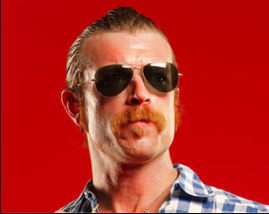
Eagles of Death Metal Mo

Eagles of Death Metal hot biker mo is hawt!

Picture 68

Tom Selleck’s Magnum mo is smokin’!

Village People

The Village People rock us all with a hat trick of Cowboy mo, Biker mo and hubba bubba Construction Worker mo.

Picture 72

Or you can just feast your eyes on Sean Connery mo, Johnny Depp mo or Jude Law mo – bring it on!

A Mo can look awesome. A mo can be sexy.

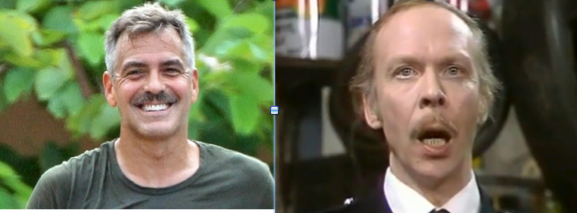
However, the George Clooney is always only one awkward trim away from a George Roper.

Picture 75


Amended a day later to add a photo of A Paul Rudd mo:

Paul Rudd


Radio and library links

A few weeks ago I was approached by 702Sydney to discuss books and libraries on The Blurb alongside host Linda Mottram and Pages and Pages bookseller Jon Page and in my ever so librarianlicious way I can’t help but share links to all that I mentioned.

I was only a tad nervous before we began having managed to get only a few hours sleep in anticipation for the show but both Linda and Jon put me at ease right from the start. I had a great time, I sprouted Dewey numbers and I even got to crack a corny Shhh! librarian joke – putting dad jokes to shame 🙂

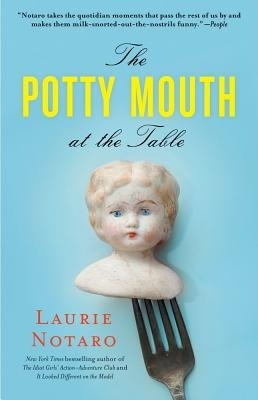
We discussed Paul Ham’s 1914 and 1914 Centenary projects and scanathons run by public libraries. I have included below some links provided to me by lovely @B3rn. I reviewed Laurie Notaro’s The Potty Mouth at the Table and then we got chatting about libraries. I must say that one of my favourite part of the discussion was James Valentine playing library roulette (in libraryland we call this serendipitous searching).

I do blame Laurie Notaro for creeping into my brain and frying it and making me think that mentioning her writing in polite company (read – radio broadcast) is quite okay. So I grabbed my shovel and dug a hole and mentioned her Hogwarts’ porn story on my first (and hopefully, Ms. Notaro, not my last, thanks to your insidious story) ABC radio show. Just no-one tell my mum. Thanks.

Here is my review that I meant to read out:

Laurie NotaroI was excited to see that Laurie Notaro released a new memoir this year. I adored her essays in Autobiography of a Fat Bride and The Idiot Girl and the Flaming Tantrum of Death, at times laughing so hard that I could not continue reading. Her first person, narrative humour is perceptive, self-deprecating and wildly funny. She is like a cross between David Sedaris and Judith Lucy.

The Potty Mouth at the Table is Notaro’s tenth book and she continues her sharp observance of events in her life. She recounts having food poisoning on an 8 hour (vomit) train ride, meeting up with a horny ex-boyfriend, maybe finding a dead hobo in her backyard, as well as her not so diplomatic reaction to her friend’s heinous cupcake tattoo and her pinterest foodie hate. Notaro’s sense of the bizarre shines through her writing and I find myself laughing out loud at her tales and reading aloud excerpts from this book to anyone who will listen.

Here are the rest of the links:

ReadWatchPlay

Read Watch Play – the NSW Readers’ Advisory Group blog and twitterchat #rwpchat held on the last Tuesday night of every month. This month – #egoread, Biographies etc!

http://readwatchplay.wordpress.com/

Centenary Links

Doing our bit: Mosman 1914-1918 – coordinated by Mosman Library

Blog, database, photos, collecting days ‘Scan-a-thon’
http://mosman1914-1918.net/project/ – blog, events

Illawarra Remembers – coordinated by Wollongong City Libraries
http://illawarraremembers.com/
Scan and share days at local libraries: http://illawarraremembers.com/events/

There is also a project at Orange – council project, but library involvement –http://www.centenaryww1orange.com.au/

See this post: http://mosman1914-1918.net/project/blog/coo-ee-from-nsw-public-libraries

City of Ryde and Kiama also have programs.

Pronouncing Library
It really doesn’t matter how you pronounce it – just use them!

http://tumblr.libraryjournal.com/post/60656742787/amen

Make-up artists in libraries

Zombies at the Tullamore (Australia) Public Libraries

http://www.libraryasincubatorproject.org/?p=8939

Bookmobiles

There is lots of stuff on mobile libraries around so I recommend people google the term. However the Shoalhaven libraries bookmobile does tweet from the road @BookTARDIS.

Deselection process of libraries

Here is an example guideline that libraries use for deselection/weeding of library collections. Different libraries use different criteria

http://www.ala.org/Template.cfm?Section=libraryfactsheet&Template=/ContentManagement/ContentDisplay.cfm&ContentID=75744

On peddling reading

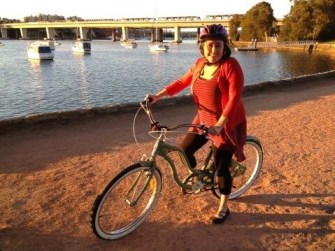
My Bike and I

My Bike and I

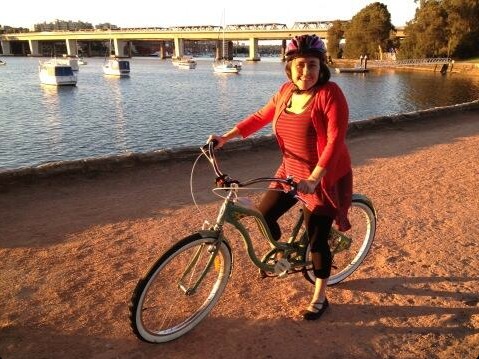
In March I bought a bike. I had never owned my own bike. I shared one with my sisters but we were only allowed to ride in our (large) backyard as we lived on a busy street. As I got older I would occasionally rent a bike when I was on holidays and the last time I rode a bike had been on the island of Poros in Greece in 1996. So finally buying a bike at the age of 43 was a huge step for me.

I am a novice. I wobble along, I have only just mastered going downhill without hopping off the bike and walking it along, I use my bell and I cannot bring myself to ride on the roads yet. I am the person who gingerly rides past people, ringing my bell and calling out “I’m still on my L-plates”. I am loving riding along Botany Bay from Kyeemah to Taren’s Point. One day, my husband and I decided to buy some cakes and we detoured and visited my cousin Peter and his wife Lysette for a lovely afternoon in Carss Park. My favourite route to ride has also given me my most upsetting ride as I had an asthma attack while riding along the Bay Run at Iron Cove Bay. I adore Iron Cove Bay. I also enjoy riding along Cooks River. Growing up in Marrickville, Cooks River was always this dirty, polluted horrible waterway. Despite my home being well beyond the 100 year flood mark, we could, on a breezy day, smell the stench wafting up from the river. In 1985, I met an elderly gentleman who told me about courting his young girlfriend on a rowboat on the river and how it broke his heart to drive past this murky mess. So when I ride past the now cleaner river, after many years of councils investing time and money to clean it up, and I see kids playing, families picnicking, kayakers on the river, I think of that gentleman and imagine him rowing his sweetheart in a rowboat and how much happier he would be if he could see the river now.

Before I had my bike, I walked all these routes, I certainly did not walk as far as I am currently riding so I am seeing much more of Sydney now. When I was younger, I took part in competitive sports, from volleyball and squash teams and cross-country running. I had coaches encourage me, suggest new techniques to me and even if I didn’t make a team I was given training in refereeing and encouraged to continue participating by the people with positions of authority. But I am no longer interested in competition or speed or anything tiring and not fun. Having a bicycle with daisies and a pink seat certainly lets others know that competitive riding is not my aim.

To date, no-one has laughed at me for this. To date, no-one has called me a reluctant rider and to date, no-one in Lycra riding past me at a top speed has told me that my riding is lesser to theirs and that I should be aiming to be a competitor. I take huge pleasure from my riding and I think it is a pleasure on par, though completely different and perhaps immeasurable, to a prize winning cyclist. To date, I have not had a single cycle shop owner scoff at me for my choice of bike or for that matter have these shop owners not stocked a range of bikes because they felt that only competition cyclists should enter their premises. If anything, my bike is mass produced. It was not bespoke. A friend of mine works for a hard core specialist cycling shop pointed me in the direction of the better pleasure riding companies – no disdain, no eye rolling – just keeping me informed. To date, I have not read of any sports journalist dismissing the pleasure rider. To date, councils have put a lot of money into developing bike tracks that are exactly that – for pleasure, for the cruisie-let-the-wind-flow-past-you-smell-the-flowers-and-the-sea-and-have-fun-doing-it rider along with the commuter rider and the child rider and the lycra Speedy Gonzalez rider.

And the same goes for just about any other sport or activity people play. Whether you are playing in the lowest division of football for your local club – no one laughs at you, points at you, tells you that you are doing it wrong and that you should be playing at a state or national level (as an aside – I realise there are still some vestiges of the nutcase over zealous abusive parent/coach etc but note they are now the outlier).  If you are booking the tennis courts at your local tennis courts – no-one treats you with derision for not hitting the ball with the skill of Leighton Hewitt.  If you take part in the City to Surf you get a medal regardless of the place you take. Whether you ran in the elite under 60 minute athletes or whether you strolled along with friends or whether you were in the middle pack and your only aim was to not be beaten by the guy in the gorilla suit. In the past week my family alone has taken part in karate classes, dancing, running, fussball, football and cycling. None of us are gold medal material. All of us had fun. And none of us were the recipients of derision from elite sports people, their coaches, sports commentators, PE teachers etc and none of them have been quoted in the newspapers as considering suburban sports players to be mediocre, useless, poorly led, indiscriminate, wastrels on the field and track. No one has tapped me on the should to say “How dare you not have progressed beyond Beginner’s Zumba after 3 years” or “How have you been going to Yoga for 5 years and still be in the intermediate class” and no one has stopped me on my cycle and inferred that I need to don lycra and up my speed. Because that would just make me quit. I would find no enjoyment in it at all. If anything, coaches, commentators, top rated players, every sports person I have known have always voiced how great it is when they see people playing grass roots sports and most importantly, that they love seeing people enjoying the game and how sad it is that some elite sportspeople can  lose the pleasure of playing in the sport they use to love.

Νοῦς ὑγιὴς ἐν σώματι ὑγιεῖ

Now I want to move on to reading for what are we all but “Νοῦς ὑγιὴς ἐν σώματι ὑγιεῖ” or “sound of mind and sound of body”. If  can exercise my body for half and hour then I can exercise my mind in a similar way.

When I was a teen, my favourite after school pass time was spending hours listening to my favourite bands and reading the lyrics sheets to their albums. Beatles, Springsteen, my Footloose soundtrack, John Cougar Mellencamp, Big Audio Dynamite and the list can go on. I also spent hours and hours reading TigerBeat because I needed to read any celebrity gossip about the Brat Pack and The Outsiders cast and Days of Our Lives. I lived for my magazines. But oh the judgement on the faces of the serious readers I would encounter. They would pucker up their mouths and politely suggest I read something “better”. By better I assumed they meant a book. People seem to think that twenty, thirty years later life has changed and these attitudes have ceased to exist. But that is untrue. I’ve seen many people criticise young girls who love to read One Direction lyrics and fanfiction. Yet when Niall and Louis from 1D decided to act out some of the tamer fanfiction they sent more teens scrambling to read than the Newberry, Carnegie and CBC medal winners has managed to do collectively in the last year.

It is these teens and many other fandom readers who tend to say to me “Oh, I’m not a reader”. This astounds me. They ARE readers.

This is a deep seated problem in our community that I hear regularly. When university graduates don’t perceive themselves as readers, when karaoke singers don’t perceive themselves as readers. I’ve met teens who have attained over 90 in their TER (the Year 12 high school leaving exam for non-Australian readers) who don’t perceive themselves as readers. I have met history and economics and science and religious book, news and blog readers who all say “No, no. I am not a reader” because they have do not identify their reading as relevant or important. Or professionals who only read for their work to say they are not readers is incorrect. They are readers. They are the structured, Lycra readers who read to achieve a professional goal (ot all reading needs to be fun). It is a particularly terrifying world when drivers of automobiles don’t perceive themselves as readers. And if you have a populace who does not identify themselves as readers despite it being their day to day activity, then you struggle to maintain relevancy as a reading industry –  and as an industry we have failed our reading passion.  If we were truly passionate about the written word then we would be embracing it in all its manifestations.

Sadly, many within the reading community, particularly those who are in positions of authority such as literary critics, teachers, librarians, authors, publishers and books shop owners do not function the same way as their sports counterparts. Rather than seeing reading as an “anything goes” pleasurable activity they couch their terms dripping with sarcasm, disdain and judgement at worst, or with patronising terms such as “reluctant” reader or “trashy fun”. Take for example Kristin Meekhof last month in her critique of Woman on Top by Deborah Schwartz saying “Readers may snicker about the title assuming this is a poorly written shallow romance novel”. Unlike Meekhof, I didn’t think trashy romance when I read this title but I thought of Nancy Friday’s Women on Top and women being empowered through sharing their sexual fantasies and the parallels between the two texts would have been a much more interesting article to read. Instead Meekhof elevates herself and Schwartz by taking a dig at the reading choices of many of Huffpo’s readers.

Then there is Ross and Kathy Petras and their book Wretched Writing. Now, I have no issue with people highlighting poorly written prose, tongue in cheek as it might be. Fine. Go for it. We all have our likes and dislikes and I have laughed at incomprehensible sentences too. But those sentences appear in all writing styles and genres. Each genre and style has representations of beautiful writing through to crappy writing. So it is of no surprise that I do take issue with the statement “We started off with romance novels. Then there’s science fiction and fantasy, where you get to be excessively creative because you’re writing about something that isn’t real,”. For we all know how real literary fiction is, right?  Implicit in the statement “But we both love words. You can’t do something like this if you don’t love good writing, too” is that the genres they investigated certainly can’t contain ‘good writing’. And if you enjoy the books and genres that the Petras’s have highlighted as the starting point in seeking out “wretched writing” then you do not know what “good writing” is.

Meekhof and Petras are just two examples of what, at times, can seem a constant stream of newspaper articles disdainful of the reading interests of invested readers.

Burton Rascoe in his book The Joys of Reading: Life’s Greatest Pleasure says that “The phrases “in good taste” and “in bad taste” are used so frequently as undefined and indefinite qualifiers by people who, ignorant of general and specific ideas, use empty catch phrases as bludgeons, that it is probably a safe rule to set down any person who uses the two phrases without any tase whatever, good or bad – an intellectual neuter, an emotional moron, a characterless individual of the pusher type who seeks to identify himself with the people he conceives to be his betters by using catch phrases which he thinks will give him the color and character of a superior being or, at the very least, put stupid people in awe of him.”

This idea that reading can only be aspirational, one in which romance, and science fiction, children’s series and fanfiction are on the bottom rung progressing slowly to the top rung where we read the award winners, the literary awards with a big gold sticker, the books some people think will make them look and sound smart when they mention them in learned company and upon finishing these gold stickered books they can then proceed to look down on readers who have not read them. This is the system by which some of those who work in the reading industry have done a disservice to the broader readers. I have seen this elevation of self committed by librarians, some blatantly and others purely by omission of materials from collections and promotional materials. I’ve seen it done by book shop owners who laugh at the suggestion of romance fiction in their shops and saying that their customers don’t read “those” books. It is much more likely that their customers don’t tell them that they are reading “those” books. By reading professionals speaking down to people, patronising them, elevating themselves as better than the everyday person, many in our community don’t want to identify themselves as readers. As long as people in authority speak with either disdain or in a patronising way then advancing literacy programs and reading initiatives will struggle to take hold because who wants to take part in an activity associated with a bunch of judgmental twats.

Not everyone who exercises wants to win an Olympic medal. I am on my bicycle and my ultimate aim is pleasure. Not to eventually progress to some speedy cycle. Not to lose weight. Not to enter some extreme BMX stunt competition to show off my Funky Chicken. I’m cycling because it is fun and so are a whole lot of other people out exercising for fun. And reading needs to take on this paradigm. Not everyone who reads aspires to reading literary prize winners. There are many of us readers who balk at the thought of reading a prize winner. Not because it is too hard (though Virginia Woolf is probably the literary world’s Tuck No Hander) but because it holds no appeal. As readers we are a broad lot. We vary in our interests as much as people who take part in sports and exercise. For some readers, literary fiction is their deep love, and this is wonderful. But it does not make them better, or worse, than the 1D fangirl reader, Whovian reader, romance reader, car manual reader or blog reader.

 Instead, let us look towards the leaders in sports – the coaches, the athletes, the management and teachers who without disdain or condescension encourage participation and as professionals in the reading industry we should try to emulate their much more egalitarian acceptance of people’s different preferences. Let the Lycra readers go their way and get your daisy and pink seat reading groove on and enjoy the ride.

Dancing and Romancing

Dancing is awesome.

Dancing is sexy. The bass pumping, the throng of bodies moving to the beat at a club or a dance festival, a vibe that buzzes, hearts jolting, culminating in make out sessions, hook-ups, one night stands or the foundation of many a relationship. It is a feeling that is hard to describe and I can honestly say that I have as yet to read a romance novel that has nailed the dance scene.

Dance moves matter and they can make or break a budding romance. A poorly written dance move in romance fiction can completely throw me out of a story. Take Anne McAllister for instance. Now I adore her books. ADORE! She is an autobuy author for me, however…in this scene in “One Night Mistress…Convenient Wife” our heroine is yearning for the hero, they’ve been fuck buddies but the insensitive hero has yet to recognise that this is lurrve. They are at a wedding and our heroine is dancing with another wedding guest.

He moved fluidly, grinning broadly as he drew her with him, leading her easily, spinning her, moving her as efficiently as if she were a rag doll with no bones and no brains of her own.

Ummm. No. Just. No.

Lucy Ellis’s fabulous debut which gave us the line “I’m not your mistress. I’m your girlfriend” turning every convoluted Mistress title on it’s head (who on earth calls anyone a mistress in this day and age) has the hero Alexei taking heroine Maisy out to a supper club for a bit of dancing. Sure. This would be fine if you are in your 70s but they are in their 20s, in ITALY! Find a freakin’ club. Even villages in Italy have nightclubs!

I’ve read peculiar scenes where the couple go out for dinner and have a little dance on the dance floor with diners looking on, gyrating scenes, wanton dancing, ballroom dancing – and I am as big a fan of Strictly Ballroom as anyone but I do not find ballroom dancing hot and sexy (though if you do read Ainslie Paton’s Grease Monkey Jive). I don’t want to read about a couple lambada-ing (it’s the forbidden dance – so forbidden it should not be danced), I don’t want to read about dirty dancing, even Patrick Swayze looks daft doing it let alone someone trying to describe it in written form. And I certainly don’t want to read about the slow, sen-su-al dancing where the heroine wonders if that is his belt she can feel against her stomach or something else hot and ridged. Frankly, I read these scenes and I suddenly feel as though I am at Les Larbey and Margaret Bland’s Galaxy of Dance.

There is nothing more unsexy than an awful dancing scene. It nullifies any sense of romance, any sexual tension, any frisson that may have been present between two characters. Let me tell you about such an event.

Many many years ago, I had a double date with my friend Anna, her boyfriend and a friend of his. I had met this guy several times and I liked him. He was funny, he wasn’t hard on the eyes, he dressed well. He ticked most of the boxes. Anyway, the poor guy suggested a night out. As I was cautious about going out with a guy I had only met once or twice I suggested joining our mutual friends at a nightclub in Kings Cross that I enjoyed going out to. I turned down the offer of a lift and Anna and I drove and met them there. The night was going well. It was hot. The music was pumping. Everyone was getting their groove on. And then the guy I was with, the man I was on a crowded dance floor with, disappeared momentarily. Not “he walked out the door to go to the loo” disappeared. More “is that the strobe light or has a poltergeist stolen his body” disappeared. My eyes quickly glanced around and there he was, on the dance floor in a split formation just as he was coming back up with a full 360 degree twirl.

He looked at me as though to say “Have I got the moves for you, Babe”.

I schooled my face while my soul screamed “Nooooooooooooooooooooooooooooooooooooooo”. I raised my eyebrows in a “Well, now we know that at least one of us is limber” look while my internal monologue was pulling together an exit strategy. We finished up the dance and I made the “I need help powdering my nose” signal to Anna and we departed subtly to the euphemism.

Upon the toilet door closing behind us, in horror I exclaimed “He did the splits on the dance floor”

“I know” she commiserated with me.

“We have to go” my voice was panicked.

“Absolutely. We cannot consort with such riffraff” Anna said (or kinda said something like that I am sure because that totally sounds like something Anna would say).

We walked out and found the guys. Mr DanceMoves came to my side and asked me if I saw him do the splits. I do recall answering “I certainly did see you”.

As per our agreement, Anna made excuses of tiredness, I made excuses of being her driver and we both made excuses that we were fine walking to the car without them and we left them both to tear up the dance floor without us. We got to the car, we drove down to Harry’s Cafe de Wheels and ate pie floaters while laughing about the most atrocious dance move evah. John Travolta on the screen is one thing but the reality of him on the dance floor is terrifying.


However, this is a scene I have read in many a romance but not with the positive pie outcome I had. How did the dance scene go so wrong in romance books? Why don’t we have more hot and sweaty clubbing scenes. Where are the music festival hookups?

Don’t give me bullshit that millionaires/made up royalty don’t club. Tell that one to Mary and Fred, Kate, Wills and Hazza.

Don’t give me bullshit excuses about cultural differences. Greek, Russian, Spanish billionaires are the leaders of the party throng, for what is Eurovision but the search for the best Europop song for the coming summer.

And don’t give me bullshit age excuses, that the clubbing scene belongs only in New Adult fiction. I have friends in their forties who regularly go to clubs and festivals. The only reason I am not with them is that I hate triggering my tinnitis. And I don’t have tinnitis because I danced at a supper club. I earned my tinnitis in clubs, discos and festivals thank you very much. Fabulous days and nights spent dancing to the pumping beats of UFO, Dig, JestoFunk, Beastie Boys, Chemical Brothers, and so many more. For it was the summer of 1994, dancing at Bondi Pavillion to UFO at Vibes on a Summers Day that I finally noticed one of my friends whom I had known for 3 years had THE best dance moves. He was a groover. He had the funk. And we danced the day away. And we got married 2 years later where we continued dancing with great friends and great music. And this only happened because John had the right dance moves and I didn’t need to buy another pie floater! (Happy Birthday John!)

I now want to read a romance with some quality pumping beats.

The Physicality of reading in Greek

I recently finished reading Άλφα by Βασίλης Παπαθεοδόρου (Alpha by Vasilis Papatheodorou). It is the first novel written in the Greek language that I have completed since 1985 when I read Hemingway’s The Old Man and the Sea.

I regularly read Greek. I have a Greek twitter feed which keeps me updated with publishing and library news. I read Greek library blogs, I occasionally read the local history essays from my dad’s region of Greece, Agrafa (mum’s area doesn’t have a local history section). I’ve read my bilingual publications of poetry, church guides and ancient plays with the English translations helping fill any gaps in my vocabulary. To add to all these, I read picture books, magazines and newspapers. However, these are all short forms of reading.

Greek Alphabet by Peter Bowers Elliott

Greek Alphabet by Peter Bowers Elliott

I have struggled with choosing long form reading in Greek. Even though my local library at one stage had the largest Greek collection in the Southern Hemisphere the Greek librarians were a tad intimidating. 2 were literary in their selections and the 3rd had been my Greek school teacher when I was 13 and is only one of two teachers who gave me the cane (another story altogether). With this in mind, I was self led in my selections. Initially I chose romances that were translated from English, reasoning with myself that at least I would understand the context of what I had chosen as well as enjoying romance. Instead, I found stilted, clumsy translations that made me cringe (is this how non-romance readers feel when they attempt to read a romance?). This led me to consider that perhaps it was the nature of translated works that did not appeal so I tried books by Greek authors such as Γιώργος Χειμωνάς and Μάρο Δούκα but they didn’t stick either. I mostly gave up though occasionally I would try a book out.

Last week, I finally completed one of those occasional tries. It was a YA book that was suggested to me by my twitter contact/colleague/friend @ArgyrisK Argyris Kastaniotis. Άλφα is about a group of troubled youths taking part in the 1973 Athens Polytechnic protests. The main character was a young man called Alexis with a difficult home life that often found him sleeping on park benches or at friend’s homes. While he is part of the polytechnic occupation and takes part in it’s destruction, burning and trashing the buildings, for respite he takes shelter and rests in one of the art studios. One of the sculptures comes to life and takes him soaring over Athens to show him her beauty. This happens several times in the book and consequently changes his outlook from a pessimistic nihilist to an optimistic teen. Had I read this book in English I think I would have been annoyed at the trite insights to the protagonist’s self. It was quite easy to see the story’s moral (δίδαγμα) message but I think it aided my understanding of the whole book.

This is not a book that I would have chosen for myself and perhaps that is why I was able to read it through. It is unlike most of my reading but I felt the weight of the story. A big impact this book has given me is the way it informed me of how I physically read.

In English, I am a fast reader. I am one who needs to race to a book’s end and only if I enjoyed it will I then reread it, savouring every word. In Greek, I found that by sheer inexperience I have to be a slower, more deliberate reader. Where in English I skim ahead as I read my text, in Greek this was impossible. Through force of habit my eyes kept trying to glance down the page as I read but this made me lose focus on the paragraph I was on. In actual fact, I found it very difficult to connect one paragraph to another as I was focusing on understanding each on its own. At no stage did I feel my reading become subconscious and fluid. As I was reading in this fashion I questioned whether the the book would make sense as a whole when I have to think so hard to understand a full paragraph? I kept questioning my comprehension skills when I shouldn’t have doubted my Greek language skills.

I found myself delighted recalling that Greek punctuation is quite different to English. Quotation marks are only used in speech in the middle of a paragraph and not with “αβγ” but <<αβγ>>. I love the ανοτελεία (anoteleia) – the top dot in a colon which signifies a pause that is between a comma and a full stop in length. Questions are signified not with a ? but with a ; (semi-colon). This makes so much sense. What is a question but part of a sentence that can be read on its own.

I became aware of the physicality of my reading – the bend of my head, my eyes shifting across the page, my mouth needing to move as I read some of the more difficult passages yet stilling when I would hit a flow. This mouthing of words reminding me of both the modern connotations of moving one’s lips as they read being that of someone with low literacy, someone who needs the auditory experience to understand the written word. And that of reading during ancient times where the norm was to read aloud. My thoughts went to St Augustine who was perplexed by St Ambrose who would read to himself, lips moving but no sound escaping his mouth. Augustine reasoned that Ambrose could only be doing this in order to preserve his voice. So as I found difficult passages my mouth was moving and I found that my chin was pulling into my chest. I flipped my tablet to read in landscape as this gave me shorter lines and shorter pages thus turning pages more often so mentally I felt that I was reading quicker than I actually was doing – something that I rarely do when I read in English. I had control over the format. I was able to control the font (I chose to not change it from the default) and the font size (I chose the second largest size mostly due to starting to read while on a train when all it was dark), I knew how many pages I had to the end of the chapter, I could change the direction of my reading.

Before I chose to read Άλφα I went through the many books I had uploaded on my tablet. I tried several of them (all in English) but none appealed so I would not attribute the format to having completed the book. The format certainly helped however I think I finally conquered my first Greek novel in 28 years because of the clarity of Papatheodorou’s writing and that Alpha is a gripping good read.

Alpha is a free download from Ekdoseis Kastaniotis http://www.kastaniotis.com/book/978-960-03-5558-1