Breaking Open a Storyteller

Beer as storyteller interests me. It is in the same vein as In Vino Veritas. Every experience we have can be turned into a story but where do we find the opportunity to tell these stories. I love that feeling on a Friday or Saturday afternoon, when the week’s work is completed, gathering with friends to partake in some wind-down storytelling. Often people meet in bars, pubs, restaurants or in their own homes and after a few cold ones the storytelling is enabled. It gets embellished, hyperbole is thrown in and it brings on laughter and tears.

Growing up, our dinner table always had wine on it. My dad would allow us a sip each from his glass and he and mum would always tell us stories of growing up in Greece. At family parties my uncle would bring his god-awful wine which was like poison but as it was home-made all the adults would drink some. I don’t ever remember anyone getting roaring drunk. They got “How’s it going, mate” happy. There was no overimbing ( how could there be – the wine was horrid), no vomitting but there was storytelling. Each person, one after the other, each louder than the other, sometimes agreeing with each other and other times calling each other crazy as their memories were so different.

I see this happening in my own home. We often will have friends over, a few beers, a few wines. No-one ever gets drunk but we all get storytelling. And as the night progresses and we’ve had a bite to eat, the storytelling gets louder and funnier.

One of my favourite stories, is actually my husband’s. He went to Mt Athos which is a monastic community in Northern Greece with one of my cousins for four days. While they were there, they met an English professor who invited them to a mountain walk to visit a hermit. My husband’s first thought was that it seemed to be a mutually exclusive activity visiting with a hermit. Nevertheless, he accepted. Once in the hermit’s house, he was offered moonshine that the hermit himself had distilled. This too, felt like it should be mutually exclusive. He drank the moonshine and then my cousin whispered to him “I don’t drink alcohol and the hermit may think I am rude if I don’t drink mine. Can you please drink mine and I’ll pretend it was me”. I’m not sure where deceiving a hermit rates in the sinning scale but my husband kindly obliged and found himself in the peculiar situation of being drunk at the hand of a hermit in a monastic community at nine in the morning. This is a story that usually comes out when he has cracked open a storyteller.

20120316-165305.jpg

I’m writing this because, storytelling has long been the predecessor to novels. Storytelling in families is an important way of passing down stories from our ancestors. Storytelling allows religion to be taught, reasoning to be understood, science to be examined, politics to be debated and jokes to be laughed at. I love when friends know each other so well that they finish each other’s stories, whether they are siblings, couples or friends from a long time back. I love that my kids know that when it is thundering outside it is Zeus angrily chasing Hera for she refused to make him a coffee. I love that my kids know this because this is what I have taught them and I was taught this because my parents learnt it from their own parents and it goes on.

So as it is a Friday afternoon, I will head out to the beautiful sunshine and have a storyteller with my husband and friends. I hope you all get to have a storyteller too.

Tipping one’s hat to Britannica’s bookbinders

Encyclopaedia Britannica’s decision to cease printing their leather bound knowledge tomes hit the news today. People became nostalgic, call back radio was busy with people regaling tales of their parents, teachers, neighbours as sales people, spruikers and customers. Telling the tale of the need to have a set on their shelves as a sign that they cared for their children’s education. My family was no different. We would tease my dad for reading through the Macropedia and Micropedia. Britannica was ace! I don’t mind that it is now out of print. I use the online access my library subscribes to and I treasure the 197o’s edition I do own.

What I haven’t heard anyone mention, though, is the superb craftsmanship of the Britannica (and for that part the majority of well produced reference books). The paper quality, though thin, is strong enough to suspend a volume from a single page.

20120314-234543.jpg

I hope that Britannica preserves their binding knowledge.

I can read a book a day but I can’t blog a book a day

At the beginning of the year I said I would read a book a day. I am mostly up to date with this aim (thank you very much Picture Book obsession). However, I’m a crappy blogger and have given up posting individual items.

So today, in a phenomenal show of catch-up, I’m listing the books I’ve read with minimal commentary.

Books 26-30:

Fancy Nancy books are awesome. Pretty, colourful and all about a fancy girl discussing her daily life. She lurrrves fancy words and this is where author Jane O’Connor brilliantly entices kids into broadening their vocabulary without being preachy. This set was a quintet (a fancy word for 5) of readers – a perfect reader set! My favourite amongst this lost was The Boy from Paris.

Fancy Nancy at the museum – car sick
Fancy Nancy & the dazzling book report
Fancy Nancy poison ivy expert
Fancy Nancy sees stars
Fancy Nancy & the boy from paris

Books 31-36

Sandra Boynton is very amusing. My staple purchase for friends’ kids, she seems to be one of the few authors who can get side-splitting laughter from toddlers. Red Hat, Green Hat seems to tickle the funny bone of an 18 month old like no other book. Bravo, Ms Boynton and thank you.

Titles I read to my nephew last week:

Doggies
Red hat, Green Hat
Hippos go beserk
But not the hippopotamus
Moo, baa, lalala
15 Animals

37-38
Faces (board book) fascinating (for a toddler) illustrated expression.
The Gashlycrumb Tinies by Edward Gorey is an abecedarium that is macabre and delicious. Having read a review of this old children’s book at Love2Read (thanks Amy) I read it online and relished it.

39-44

Sara Craven: I’ve been on a mini-glom of Sara Craven’s books. Dark and sad they are classic Mills & Boon. But I won’t go into detail here as I mean to write a post on her, soon.

One Night with his virgin mistress (brill but such an awful, untrue title)
Innocent on her wedding night (meh)
The Santangeli Marriage (torrid, objectionable, full of melodrama)
Dark Paradise (TSTL heroine)
Escape Me Never (autocratic, controlling alpha brute. Horrid story)
Sup With the devil (one of teh best evah M&B)

45-46

Miranda Lee – Beth and the Barbarian weird weird weird. Imagine a romance on a set from The King and I and throw in a feisty (read grating) female protagonist with the alpah male dressing weirdly. I will write about this book at a later date.

Lucy Ellis – Innocent in the Ivory Tower is a brilliant debut. Dark but simply divine book.

47

Harry Potter and the Philosopher’s Stone by JK Rowling

So I’m pretty late to the Harry Potter party. I read the first instalment to my son and we finished it in a week. An easy page turner read, I am now a fan. And I get the Harry fan sqee.

I still have read more books that I ended up listing. But at least I have now made a kink in my bloggi g backlist.

Historical Romance for libraries: your top 5 picks

Next week, I am doing a 5 minute lightning talk on selecting Historical Romances for your library at the History in the Dixon readers advisory seminar. I thought, rather than tell librarians the authors that I deemed necessary to be added to a standing order list (because that would be subjective and we can’t have that), I thought I would crowdsource some reader preferences.

So, send me your Top 5 Historical Romance authors for libraries. Either post your preferences in the comments below or send them to shallowreader@gmail.com and I will post them to this blog. I will also collate them for the presentation and create a Top 10 out of everyone’s Top 5.

Thank you.

Fugly Built Environment: Reading Photo Essays – Books 15-20

Tim Winton and Mick Mischkulnig’s Smalltown is a photo essay of the ugly characterisitcs of far flung Australian towns.

There is nothing so bleak and forbidding in country Australia as the places humans have built here.

Reading through Tim Winton’s essay in Smalltown I was struck by his insight on Australian’s militant unfusiness and I’m in some way annoyed with myself for not having come across this essay before my home renovation. We had nice builders. They weren’t patronising, they listened to our needs – though they didn’t necessarily deliver what we asked for. But it is this quote about Australian tradespeople that stood out for me:

Tradespeople are not immune to this spirit of untouchable carelessness, for when it comes to a service rendered to others, rough enough is often still good enough. Robin Boyd died before ‘she’ll do, mate” made way for ‘fuck you, mate’ and worse. Militant unfussiness can seem amusing or even charming at a distance, but when you’re on the receiving end, paying for rubbish, getting it late and having to say thank you for the privelege, it’s ugly and deeply unfunny, a form of moronic bullying. Sometimes only the bravest amongst us dare to be fussy.

It was when our builders were putting up out ceilings and walls that I asked them why they had only bothered pulling out half the electricals. They laughed and said “Can’t make the electricians life to easy”. Well that was a big “fuck you” to me. Not only did they make the electrician’s work harder, therefore making his work longer therefore helping him earn more but under more stressful conditions but it also left me with disgust for a group of builders who I had started out thinking were lovely people. In future, I will keep Winton’s essay in mind when I am choosing tradespeople. Getting back to the book, Mischkulnig’s photography perfectly illustrates the sparseness, the impermanence of construction that Winton discusses.

Having completed Smalltown I went to my bookshelves to revisit old favourite books Meat, Metal and Fire and Blokes and sheds both by Mark Thomson. I wanted to look at them, not in the joyful celebration of man spaces that they were intended and in which I have always regarded them but as a reflection of Winton’s essay of celebrating this “good enough” culture. Instead of seeing the ingenuity of creating sheds, barbeques and the like, I chose to see them from the eyes of not needing to build things to last, denying permanance because this was not a space to stay in. This lends a tinge of unexpected sadness to these favourite books.

To add to this list, I also read Shack: in praise of an Australian icon By Simon Griffiths (yes, all these books in the same day. It helped that they were all pictorial essays). Shack celebrates the rough and tumble shack. Some as holiday homes, others as workplaces and others as permanent homes. And though beautifully appointed, I couldn’t help but reflect back to Winton’s stark essay. It is not that Winton’s essay changed any of my perceptions. I would say he validated opinions that I have held for a very long time.

Late at night, I decided to cap off my fugly built environment reading day with a touch of irony by reading Dorothea McKellar’s poem My Country. As it is not this brown, plague-ridden, drought-stricken, flooded land that is at fault. Our land is wonderous. It is what we build on it that needs to be rethought.

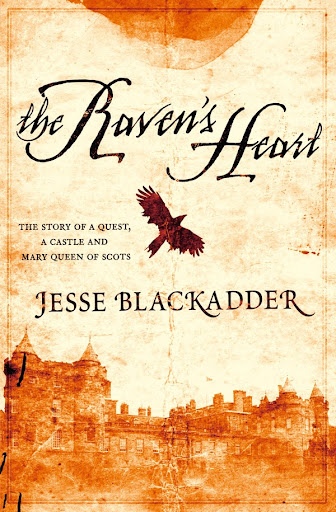
Jesse Blackadder and The Raven’s Heart: Book 14

I read The Raven’s Heart by Jesse Blackadder as she will be talking at the NSW Readers Advisory History Seminar and I wanted to be familiar with her book before she presented it.

I struggle when I am reading historical fiction. Although I love reading history, it’s fiction counterpart has me running to my reference shelves, cross-checking events and details in the book and rarely do I find myself being lost in the story. After cross checking with several history references during the first few chapters of this book I found myself relax and lose myself into this story of an androgyne in the court of Mary, Queen of Scots.

The story of Robert/Alison Blackadder and his/her deep abiding love for his father, the need to please him and his/her love and service to Queen Mary and Alison’s own erotic affairs with both women and men drive this complex story about the struggle for inheritances. I loved that the story was so rich, yet the language was not florid at all. A wonderful, touching tale.

20120211-002057.jpg

Retro Romance Reading: Books 10, 11, 12 ,13

I became an obsessive fan of Mills and Boon and other category romance lines during the 1980’s when I was a young teen. So I decided to read some older titles. I also decided to combine this with the Australian Women Writers 2012 Reading and Reviewing Challenge. So here I have 4 Mills and Boon written by Australian Women Authors.

20120208-135951.jpg

Of the four listed below, my only reread was Lynsey Stevens’ Ryan’s Return. I recall reading this as a teen and finding it – not romantic – but saddened by the actions of the adults around the two protagonists. Perhaps still a sign of the category fiction range at the time, but having a 23 year old sleep with a nearly 17 year old (both of whom were besotted with each other) feels very uncomfortable, though real, to me. For their parents then to insist on a shotgun wedding after which said 23 year old leaves without a word to anyone just worsens the feeling. To add to the mix our nearly 17 year old heroine falls pregnant and has twins. She is lucky enough to have the support of both her father and her in-laws. The main story takes place 8 years later when the hero finally returns to “claim” his wife and children. The strength of the story is that the author does not gloss over the long time the hero is gone. When it comes time to explain his absence to his children (and wife) he talks about how even adults can make mistakes, how having his hand forced made him lash out. How his behaviour during the first two years was abominable and though not excusing himself, it certainly explained some of his actions. As per most Mills and Boon, there is a redemptive Happily Ever After and one that, as a reader, I felt comfortable with. I also liked the sex scenes which, though they were signature torrid, they were not graphic nor did they use eyebrow raising allusions. For a category romance published over 30 years ago, I certainly felt it had aged well and was still readable and I can certainly understand why I have held onto my copy for all these years.

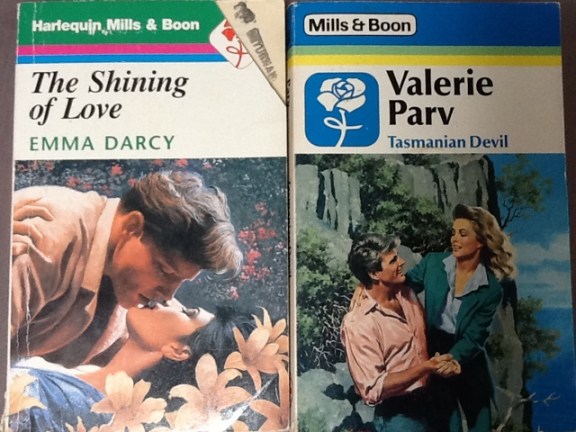
My other 3 choices I found in a second-hand bookshop. 2 titles were by Emma Darcy and one by Valerie Parv.

A Very Stylish Affair by Emma Darcy was perhaps my least favourite of the 4 books though readable enough that I finished it in a day. The out of the bottle red headed feisty heroine grated on my nerves as did the less than professional alpha lawyer hero. Of course, there was the stunning other woman also on the scene with the obligatory lack of communication and misunderstandings between the leading protagonists. I am still not sure why I read this book to completion…perhaps because I really liked the Lindfield/Sydney setting.

20120208-140022.jpg

On a completely different note, Emma Darcy’s The Shining of Love was compelling. Part of a series of books around a family of fostered siblings, this Mills and Boon has the out of the ordinary set up of the female protagonist being married (to a man she loved and respected) and turning down the male protagonist who fell in love with her at first sight and begs her to leave her husband (which she doesn’t). The book spans 18 months, there are parallel missing child storylines, the obligatory “other woman” and a series of coincidences that could have been trite but were handled very well by the author. Though I didn’t feel convinced by the protagonists as a couple, I did however, love the rest of the story.

Last of the pick was Valerie Parv’s Tasmanian Devil. Here is another book that I really enjoyed. A twist on the “alone on a desert island heiress learning to fend for herself” storyline, this is a classic Mills and Boon in that there was an alpha man saving his womAn, jealousies, misunderstandings and many other over the top, melodramatic scenes which make for a thoroughly enjoyable story. I particularly loved the sex scenes which were not at all graphic but filled with swoony allusions. My favourite line was:

Having read these four titles, I will continue on my journey for more Mills and Boon Australian publications throughout this year.

Let’s Do It, Spicy Pop-ups and the Wonder Book of Sex: Books 7, 8, 9

Book 7: Let’s Do It  by Cole Porter with illustrations by Ward Schumker.

Porter’s Let’s Do It is a favourite, so when I saw this picture book version, I felt the need to own  it. With delightful illustrations, joyous couplings and bright primary colours this book lends itself well for storytime with young kids. For “Let’s Do It, let’s fall in love!”

Book 8: The Roaring Twenties: A Spicy Pop-Up Book for Adults Only illustrated by Pete Seymour, Borje Svensson and paper engineering by Rodger Smith & Dick Dudley.

I love pop-up books. They are clever and cool. This is the first Adults Only pop-up book I have read. And, unlike the misleading title, its cheeky and suggestive text and pop-ups are tame. Tabs allow peek-a-boo situations to be illustrated in a typical 20’s fashion.

Book 9: Wonder Book of Sex by Glen Baxter.

This book is filled with odd, peculiar illustrations of absurd (and mostly non-sexual) situations. I always have a laugh at the inanities illustrated in this book. Perhaps one of my favourite wedding presents from a librarian friend.